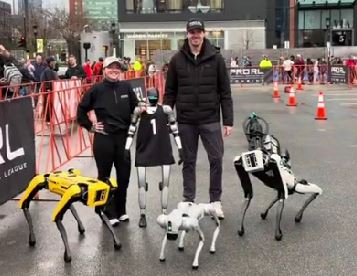
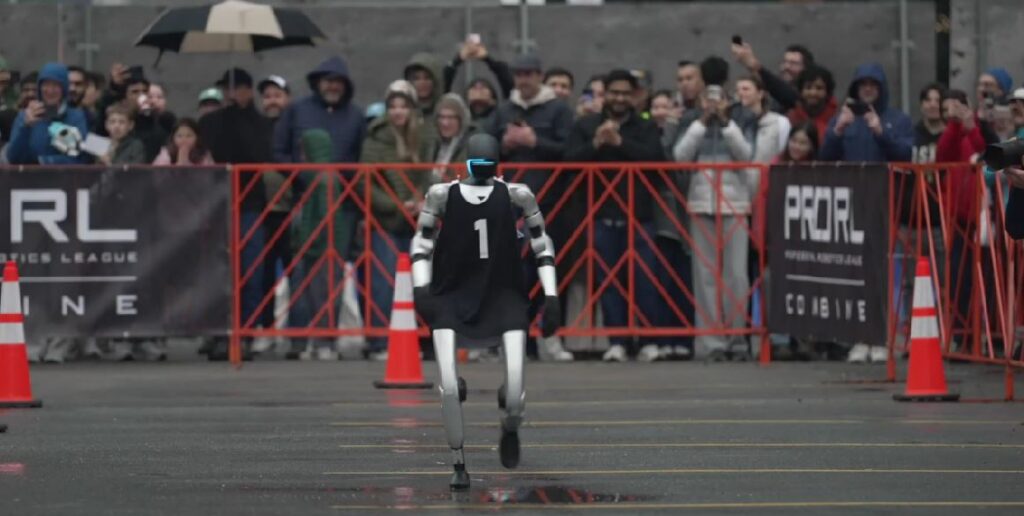
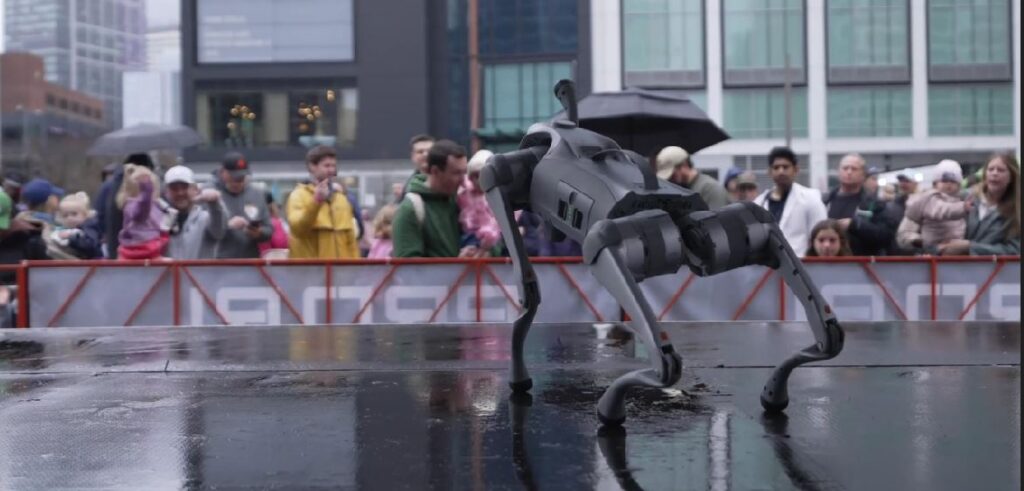
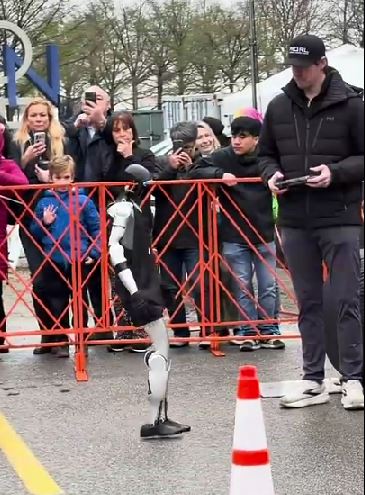
In April 2026, a humanoid robot sprinted 50 metres down a spectator-lined course in Boston’s Seaport District, in the rain, the day before the Boston Marathon. It was the first professional robotics sports event ever held in America.
How Did the Professional Robotics League Actually Start?
The origin story is a collision between two things that had lived separately in co-founder David Grilk’s head for years.
Grilk spent over twelve years at Conventures producing large-scale live events, including road races — meaning the logistics of organizing competitions were second nature to him. Meanwhile, he kept watching humanoid robotics accelerate. At some point the two ideas met, and the question became simple: what if robots raced?
The first instinct was smaller than what the Professional Robotics League became. The initial plan was a standalone, one-off event — something fun and novel. The turning point was getting connected with Dr. Alex Wissner-Gross, the scientist and entrepreneur.
“After a few conversations with Alex it became clear this wasn’t a one-off,” Maher explains. The underlying technology was advancing fast enough, and public appetite for experiencing it was real enough, that there was a genuine opportunity to build an organization rather than run a single race. That conversation changed the scope of what ProRL was going to be — from a single race into a company.
Who Is Building ProRL?
The founding team splits the company along two distinct engines.
David Grilk, Co-Founder & CEO — a live-experiences operator with 12+ years at Conventures producing nationally recognised races, citywide events, and large-scale brand activations. He owns ProRL’s Discovery & Events engine and overall company strategy.
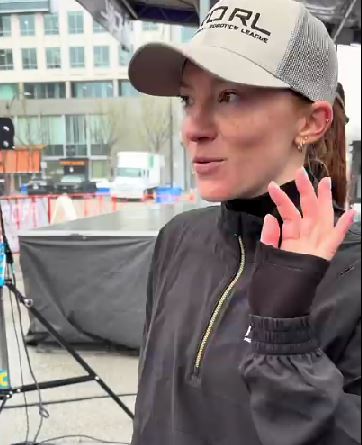
Brooke Maher, Co-Founder & COO — a systems and infrastructure builder with 9+ years across operations, M&A, and technology development in fast-moving sports and technology environments. She owns ProRL’s Distribution & Service engine and platform development.
The advisory bench is where the Professional Robotics League’s thesis gets validated from three different directions:
- Tom Grilk — former Board President and CEO of the Boston Athletic Association, who led the Boston Marathon for over a decade and played a substantial role in the World Marathon Majors. He validates the events thesis.
- Dr. Alex Wissner-Gross — award-winning computer scientist, entrepreneur and investor, co-host of the Moonshots podcast with Peter Diamandis. He anchors ProRL’s credibility in AI and embodied intelligence.
- Kent Sahin — founder and exited CEO of REAL Software (now Rightsline) and Kenan Systems (now Amdocs). He validates the service-network thesis with platform infrastructure experience at industrial scale.
Why Boston, and Why the Seaport Specifically?
“Boston is world renowned in robotics and sports, but those two things had never been combined before,” Maher says. The density of robotics talent, capital, and research in the city is unmatched — MIT, Harvard, Boston Dynamics, the RAI Institute.
The Seaport was equally deliberate. WS Development has built it into one of the most dynamic innovation districts in the country: a waterfront environment where technology, culture, and commerce already converge. Maher frames it as the right backdrop for an event that is itself a convergence point, adding that ProRL and WS Development share a vision of the Seaport as “the place where Boston’s future announces itself.”
Was the Boston Marathon Timing Deliberate?
Entirely. The Combine was held the day before the Marathon, when roughly 30,000 runners take to the streets and the city is already electric with athletic energy from all over the world.
The Marathon has defined Boston’s athletic identity for over a century. The framing was that ProRL defines what comes next.
What Did the April 19th Combine Actually Prove?
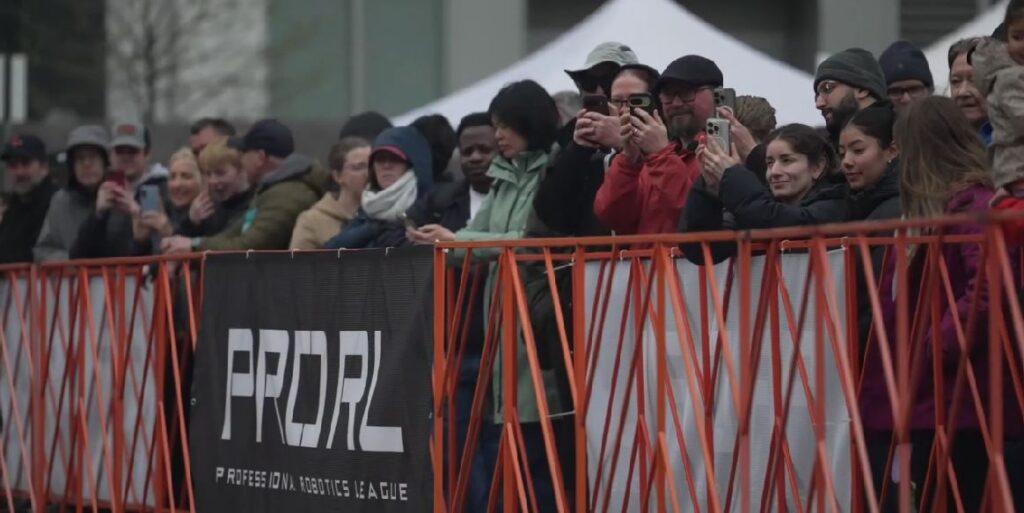
The Combine drew more than 1,600 RSVPs within a month of planning. A post-event survey went to 600+ attendees, with numbers affected by rain on the day. The response data:
- 61% of attendees had never seen a humanoid robot in person before the event
- 96% reported positive sentiment toward humanoids afterward
- 89% said they wanted to attend a future humanoid event
- 76% said they’d be excited to attend a humanoid folding competition
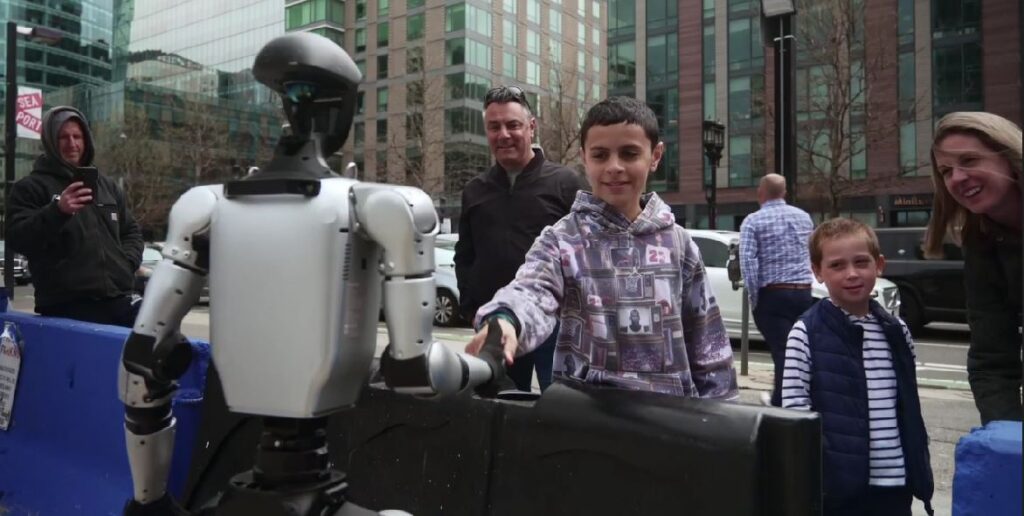
That last figure is worth sitting with. Three-quarters of a general-public audience said they would turn up to watch robots fold laundry competitively — which suggests the appetite for robot sport extends well beyond spectacle into genuinely mundane task-based formats.
Maher identifies the biggest surprise as “how quickly the emotional needle moved. People arrived as skeptics or first-timers and left more positive.” She frames this as proof of the core hypothesis: a live, competitive setting is what turns curiosity into genuine enthusiasm and demand for robots.
Which Robots Competed at the ProRL Combine?
The full field, confirmed:
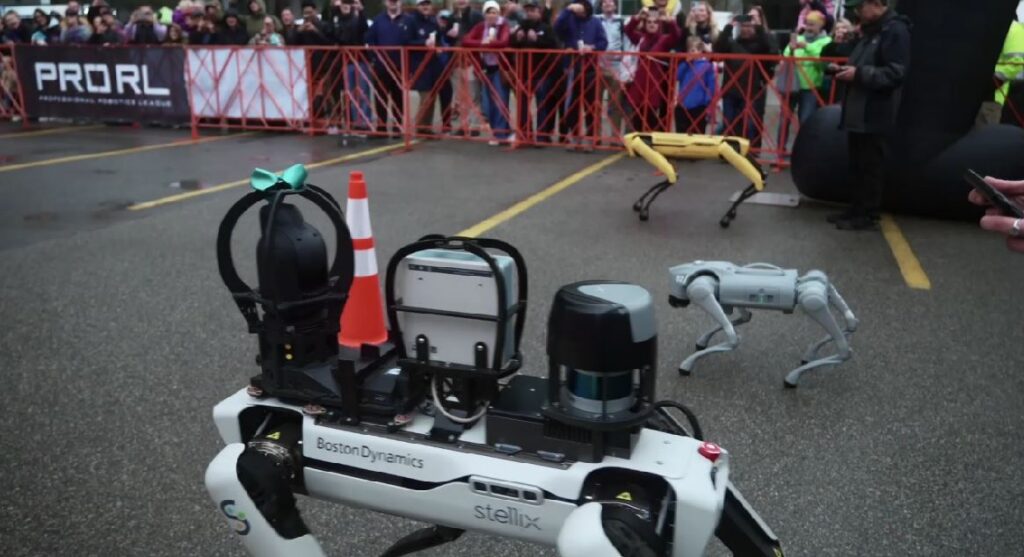
Humanoids: Two Unitree G1s, a Booster K1, and an Agibot X2.
Quadrupeds: Two Boston Dynamics Spots — operated by 3D Cowboys and The Stellix Group — and a Unitree Go2.
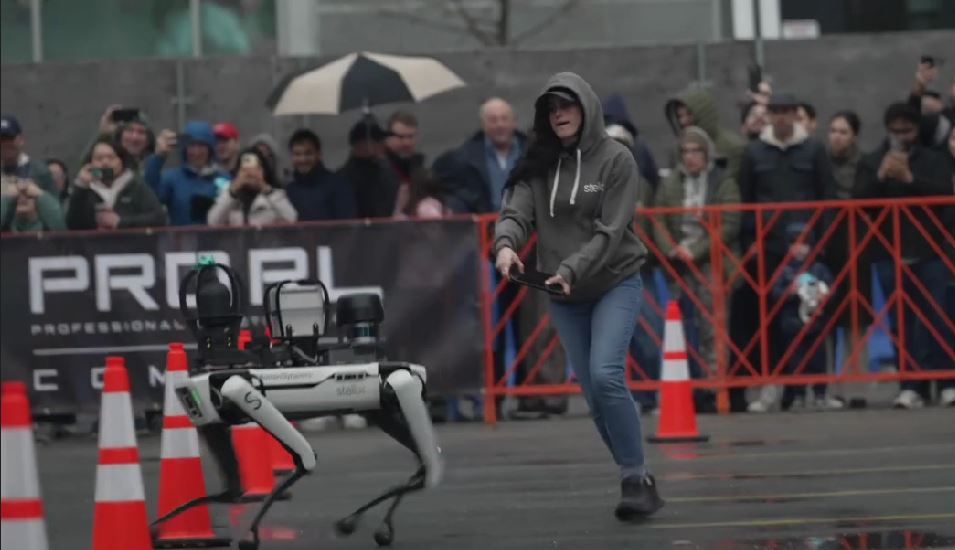
Maher is direct about why the field looked the way it did: it “reflected who was ready to compete safely and publicly today.” She adds that future events actively invite all manufacturers, including American companies like Agility Robotics, Figure, and Apptronik.
What Was the Competition Format?
The centerpiece was a 50-metre sprint down a spectator-lined course running through the middle of the event. Between races, live demonstrations from the stage gave attendees a closer look at what the machines could do.
It’s been confirmed that future formats will expand considerably with planned household skills, industrial tasks, and athletics competitions.
Is Quadruped Racing a Permanent Part of ProRL?
Yes. ProRL defines itself as the first professional sports organization for humanoid and quadruped robots. Quadrupeds are a standing part of the competition format rather than a one-time addition. Both categories were at the Combine and both are on the roadmap as ProRL scales.
How Does the Events Business Relate to the Servicing Business?
This is the part of ProRL that is most consistently underreported — and it’s the part that actually generates revenue today.
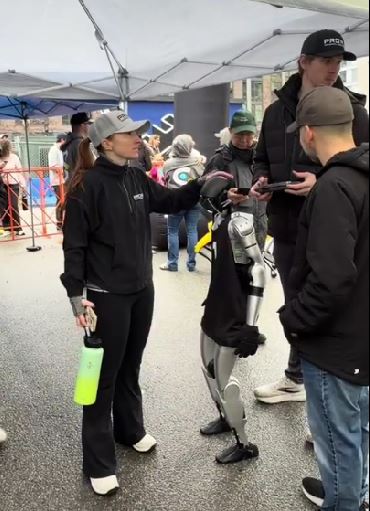
The events came first conceptually. But running North America’s first humanoid race surfaced something unexpected: “after the Combine, people didn’t just want to watch robots, they wanted to rent, buy, and keep them running — and there was no neutral US-based partner doing that well.”
The two sides now form what Maher describes as a flywheel:
Discovery & Events puts humanoids in front of the public and builds trust, which turns into demand. Distribution & Service captures that demand — every deployed humanoid needs delivery, activation, parts, and repair across its lifecycle. Servicing robots grows a bench of technicians who also engineer ProRL’s own competition robots to peak capability, which produces more rigorous benchmarks and a bigger audience at the next event.
“Events build demand; service captures it; it compounds.” Maher frames ProRL as building both today’s revenue (service) and tomorrow’s category (events).
Who Are ProRL’s Servicing Customers?
The near-term market is the embodied-AI industry itself: developers, research labs, and organisations already running humanoids day-to-day. Maher describes these buyers as “funded, transacting, and badly served by existing infrastructure” — while being honest that this is “a small, but current, market.”
The second customer set is more strategically interesting: overseas OEMs. Top-tier manufacturers shipping into the US with no service or sales footprint need a domestic operating partner. Maher identifies this as ProRL’s wedge on both service and distribution.
The longer arc — enterprise and consumers across logistics, healthcare, retail, hospitality, households, and the public sector — arrives as prices fall and trust builds.
What’s Coming in Fall 2026 and Beyond?
Here the Professional Robotics League is candid about being early. On the Fall 2026 event: “Still TBD on these. We are currently focused on fundraising so that these events can come to life.” On what a full 2027 season looks like: TBD. On how the potential US import restrictions on Chinese humanoid hardware affect sourcing strategy: TBD.
Those are honest answers from a company at a genuinely early stage, and worth reporting as given rather than dressing up. ProRL has run one event. The roadmap beyond it is being actively built rather than announced.
Where Is the Professional Robotics League in Five Years?
Maher’s answer is the clearest articulation of ProRL’s actual ambition: the “front door” to robotics — the category default across three compounding engines.
Events become the premier robotics sport with a structured circuit and media rights — a category-defining piece of live IP. Distribution & Service becomes the backbone of national robot logistics, the trusted neutral layer keeping deployed humanoids running across every manufacturer. And a marketplace launches as the front door to global humanoid commerce, where you buy, rent, certify, benchmark, and distribute on one platform — “when today’s audience becomes tomorrow’s buyer.”
Success, as Maher defines it, is owning that convergence point as the humanoid economy scales toward its projected multi-trillion-dollar size.
What Does ProRL Think Its Role Is Beyond Entertainment?
Dr. Wissner-Gross has described professional robotics leagues as doing for physical AI what NASA competitions did for aerospace. That argument is extended with a specific data point:
China’s robot competitions functioned as public testbeds that accelerated commercialization. One half-marathon runner-up’s manufacturer reportedly took 2,000+ commercial orders in the months following the event. Meanwhile, as Maher puts it, “the US builds the most advanced robots on Earth, but they are rarely seen live in the public eye.” ProRL’s stated aim is closing that gap — “in the way NASCAR did for automotive engineering.”
Beyond entertainment, every ProRL competition is seen as an IP engine: generating neutral benchmark data, standardized competition formats, and media rights. The ruleset is deliberately living — evolving as hardware and software improve, which Maher says, “keeps the data honest.” Over time the disciplines expand from sprints toward dexterous, task-oriented skills that map directly to warehouses, hospitals, and homes.
As a Public Benefit Corporation, the Professional Robotics League’s stated mission is to usher in the age of robotics by building public trust and accelerating adoption for the whole industry — and to help build the physical-AI workforce the US is racing to develop.
What Does ProRL Think Is Most Misunderstood About It?
Three things, according to Maher.
First: ProRL is not just a spectacle company. The races get the headlines, but the distribution-and-service side — the OEM-neutral backbone generating recurring revenue today — is “arguably the more durable business, and it tends to get less attention than robots running.”
Second: the Combine wasn’t a stunt. Maher describes it as a deliberate proof-of-concept for a professional sports league, drawing the comparison directly: “the way the first NASCAR race was the seed of a multi-billion-dollar enterprise.”
Third — and most pointed — the “why Chinese robots” question. Maher argues it’s “usually framed as a geopolitics story when the real answer is safety-first selection plus a genuinely OEM-neutral, multi-manufacturer strategy that includes American hardware.”
Given that Congress is currently weighing legislation that would restrict exactly the hardware ProRL used at its first event, that framing is worth taking seriously — and it’s a meaningfully different answer than the one the political debate assumes.
The Human Frame
Maher’s closing answer is the one that best captures what ProRL thinks it’s for.
“ProRL views robots as human enhancers, not human replacers. We will create jobs in an industry the public views as taking human jobs.”
And then the line that explains why the events side exists at all:
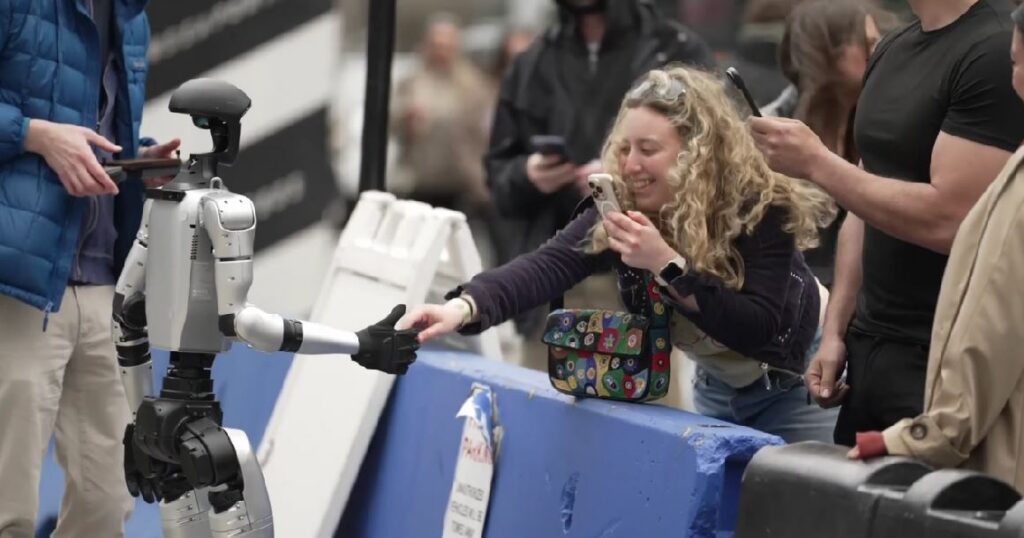
“Before robots show up in everyone’s workplace or grocery store, this is the moment regular people get to stand next to one in a safe setting and cheer for it, the way crowds once gathered to watch early cars. Before robots arrive everywhere else, they compete here.”
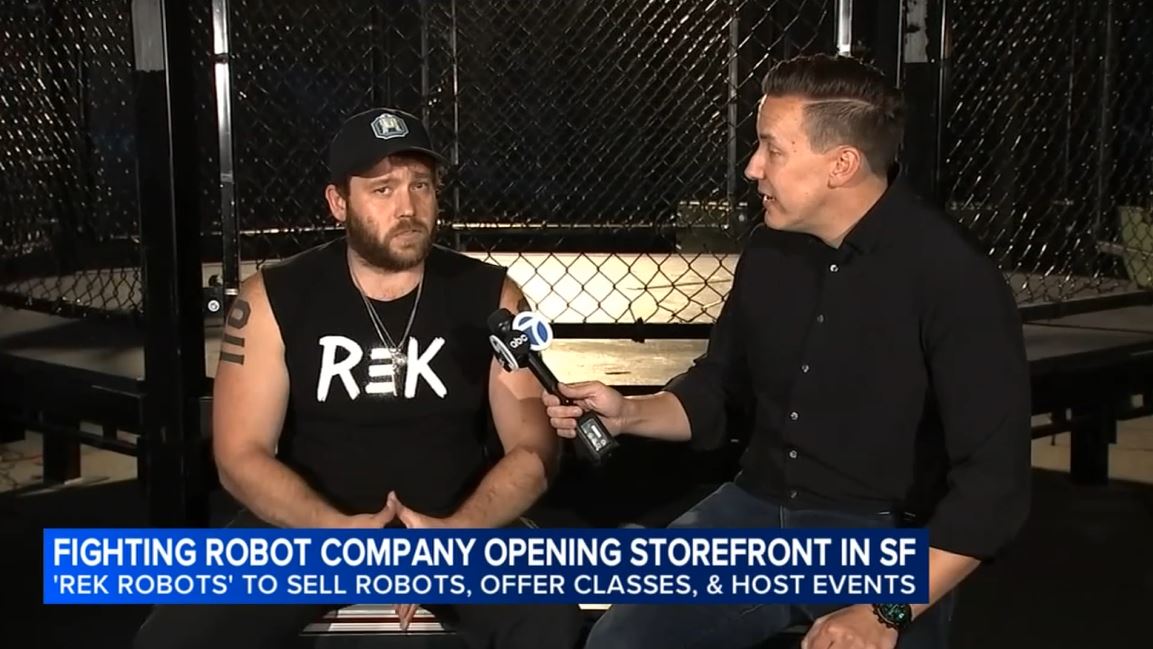
For more on ProRL, see our original ProRL profile. For the broader picture of American robot sport, see our coverage of REK Robots and UFB.