Most sports have a participation barrier. Professional boxing requires years of training, physical conditioning, and a body built for combat. Formula One requires millions in engineering budget and a team of hundreds. Even esports — the most accessible competitive format of the modern era — requires hardware, software, and hundreds of hours of practice before a player competes meaningfully.
Ultimate Fighting Bots (UFB) has a different ambition. Their barrier to entry is a game controller.
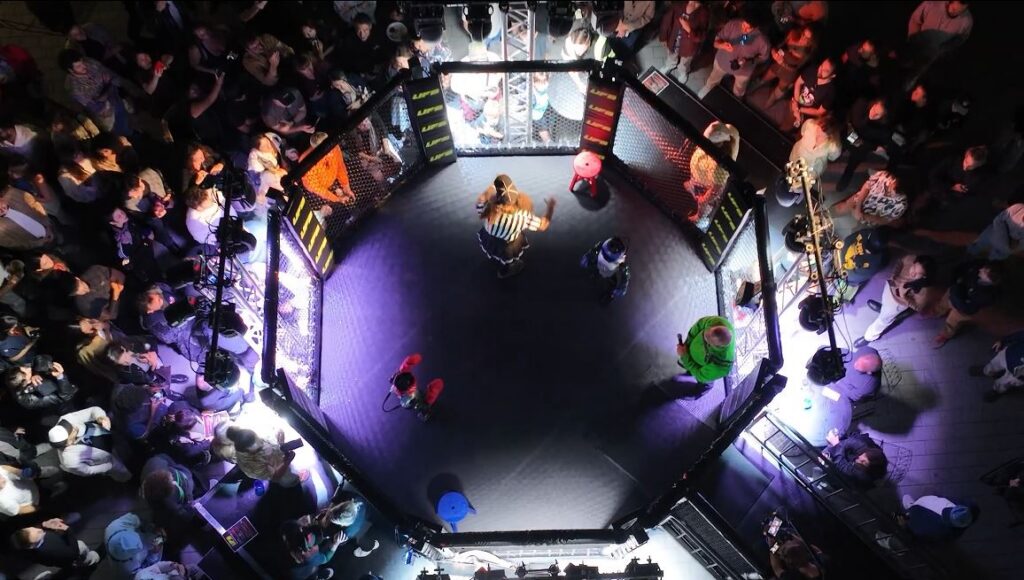
Founded in early 2025 in San Francisco, UFB has built a robot combat sport where anyone with a standard controller and an internet connection can pilot a humanoid robot in a real fight. The robots are real. The damage is real. The pilot can be anywhere on earth.
Video Featuring UFB (Featured at 16:15 mins- 17:07 mins)
The Founding Vision of Ultimate Fighting Bots
UFB was co-founded by Xenia Bulatov, who serves as CEO. Speaking at a Forbes event in June 2026, Bulatov articulated the organization’s founding thesis with unusual clarity — not just as an entertainment proposition but as something with deeper structural significance for the robotics industry.
Her argument rests on three pillars.
The first is standards. “What Formula One did for the automotive industry is now needed for robotics,” she said. Competitive sport pressure-tests robots under conditions that controlled laboratory environments cannot replicate — continuous dynamic stress, unpredictable opponent behavior, real-time decision-making requirements, and the constant incentive to improve that competition provides. UFB is, in her framing, infrastructure for physical AI development as much as it is entertainment.
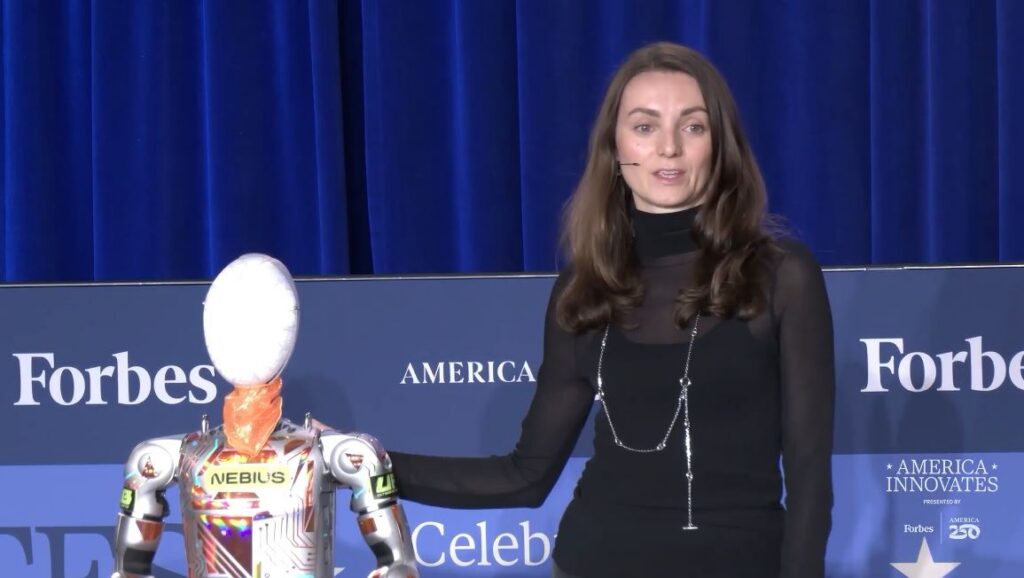
The second is evaluation. The humanoid robotics industry currently has no common framework for assessing whether one robot is genuinely better than another. Manufacturer specifications are self-reported. Lab demonstrations are controlled. Competition results are objective. Ultimate Fighting Bots provides what Bulatov describes as “a live test bed for physical AI” — a context where trained moves, control architectures, and AI decision-making are tested against real opponents under real competitive pressure.
The third is cultural adoption. “People need to feel inspired, curious, and emotionally connected. We need new stories, new heroes, and new ways for people to build that relationship with machines that is beyond fear and abstraction.” UFB’s accessible pilot model — anyone can compete — is a direct response to the gap between public awareness of humanoid robots and public emotional investment in them.
Keith Botha, Ultimate Fighting Bots’ Head of Entertainment, has framed the league’s consumer mission in similarly direct terms: “We believe that robotics will be the number one consumer technology moving forward. More people will have robots than they have mobile devices”.
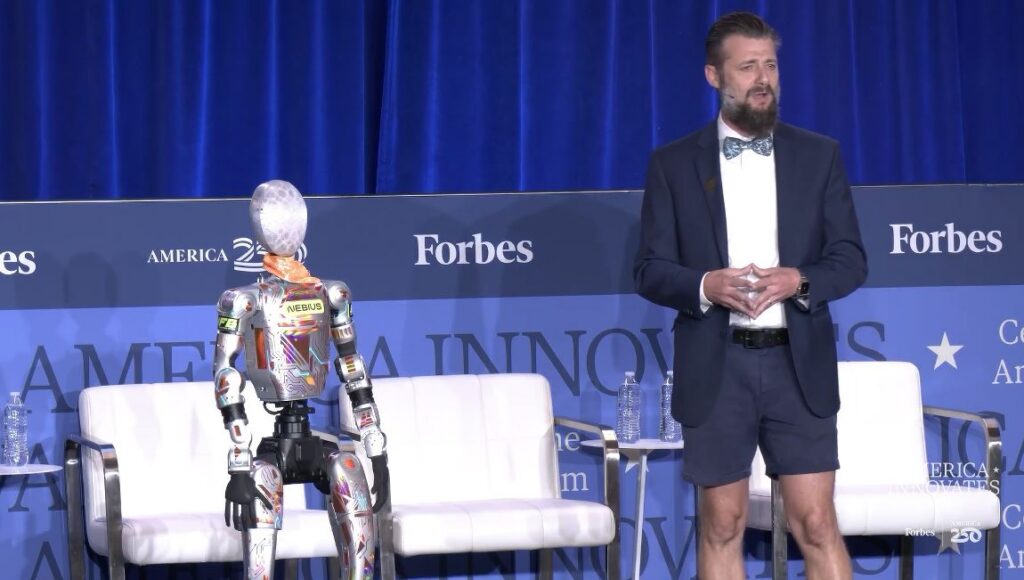
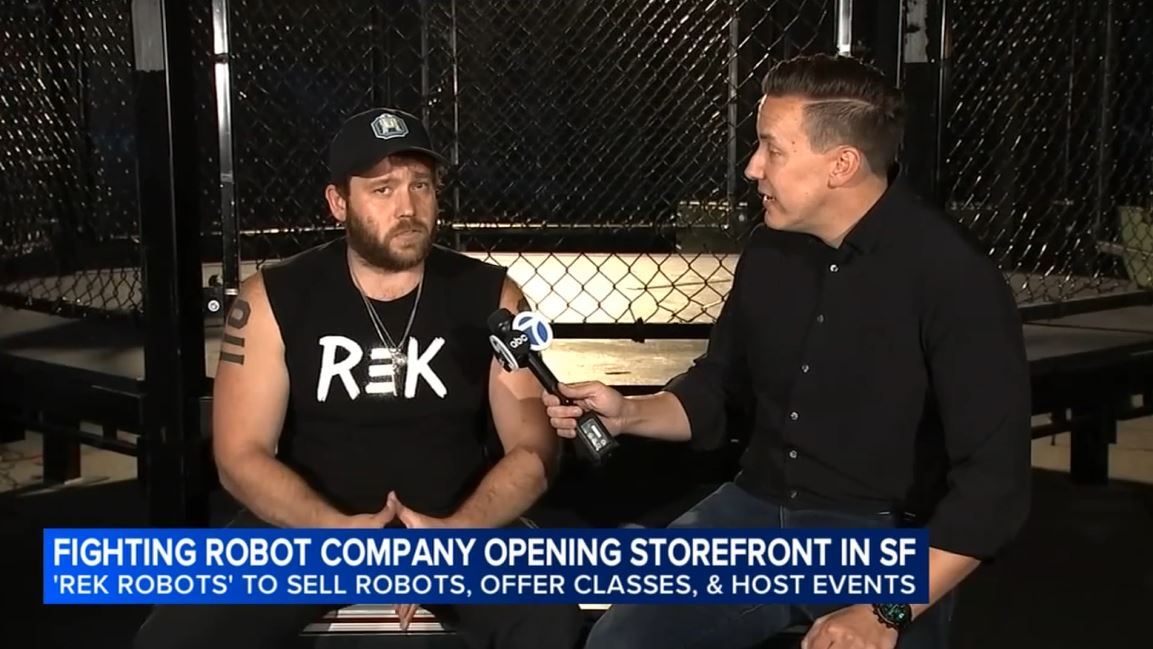
It’s worth noting that Cix of REK independently used the same Formula One analogy when describing his own organization’s long-term vision. Two founders of competing robot combat organizations, in different cities, arriving at the same comparison unprompted. That convergence signals something beyond marketing rhetoric — it reflects a genuine, shared understanding, across the current generation of robot combat sport builders, of what competitive sport actually does for an emerging technology.
What UFB Events Actually Look Like
UFB began as an experiment in the basement of a San Francisco building in early 2025. Within months it had outgrown that origin.
Since founding, UFB has staged seven major events across San Francisco, Los Angeles, Las Vegas and Dubai — an international footprint built in under a year from a basement experiment in Frontier Tower, San Francisco in July 2025. The format combines live robot combat — real Unitree G1 humanoids fighting in real time — with a pilot accessibility model that deliberately lowers every possible barrier between the audience and the action. Pilots don’t need to be present at the venue. They don’t need specialist training. They need a game controller and a connection.
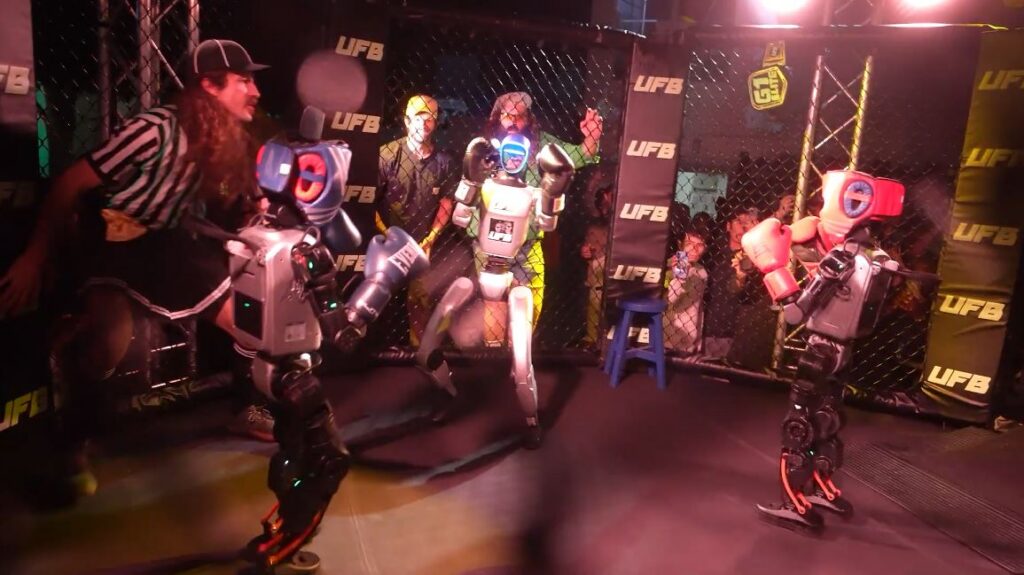
The fighting disciplines extend beyond pure combat. UFB covers martial arts and dancing as distinct competitive categories — making it a broader humanoid performance sport platform rather than a combat-only league. This breadth is deliberate: it expands the potential audience beyond people who follow combat sports, reaching communities that respond to dance, performance, and precision movement, as well as fighting.
The Unitree G1 humanoid is UFB’s standard hardware across all competitors. Recent additions to the humanoid guide database include updates for Unitree’s latest H2 model priced at $29,900 — but the G1 at approximately $16,000 remains the accessible platform that makes UFB’s model viable. Consistent hardware across all competitors removes equipment advantages from the competitive equation, ensuring that pilot skill and AI training determine outcomes rather than budget.
The Nebius AI Cloud Partnership
UFB Season 1 runs across three major events in the San Francisco Bay Area over summer 2026. The season’s competitive infrastructure is powered by a partnership with Nebius AI Cloud — a physical AI cloud infrastructure provider that supplies the training and compute environment for UFB’s pre-trained movement policies.

The training architecture works as follows: pilots can upload video of themselves performing movements — martial arts techniques, dance sequences, combat maneuvers — through a tool called Ultimate Bot Studio. That footage is processed and translated into robot motion policies through machine learning. The resulting trained moves are then available to pilots during competition, triggered through controller input rather than direct teleoperation.
This approach is more sophisticated than it first appears. Pure teleoperation — a robot mirroring a pilot’s exact movements in real time — produces mechanical, imprecise combat that looks nothing like the fluid athletic movement audiences expect. Pre-trained policies, triggered by pilot input and executed through trained AI, produce movement that is both more fluid and more visually compelling than direct control could achieve. The pilot provides strategic intent. The AI provides athletic execution.
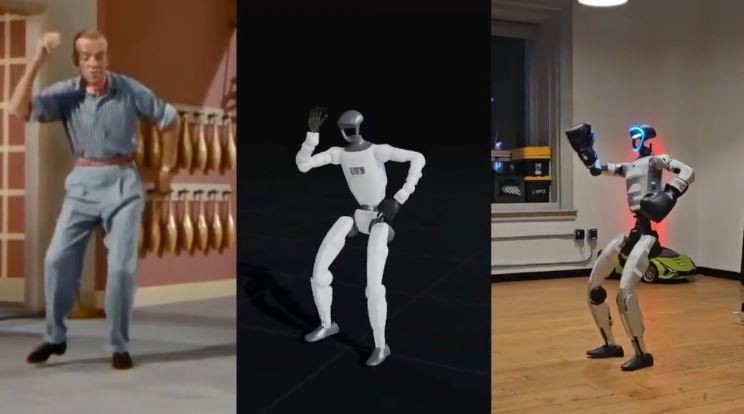
takes this a step further: by allowing any pilot to upload their own movement video and have it translated into a robot policy, UFB has created a genuine user-generated content layer within a competitive sport. A martial artist in Tokyo can upload their technique, have it trained into a robot policy, and compete against a dancer in London whose own movement vocabulary has been similarly translated. The robot fight is, in this framing, a proxy combat between two human movement traditions — mediated through AI and expressed through identical hardware.
At the Forbes America Innovates event in 2026, UFB demonstrated the system live — bringing a robot called Cricket on stage and performing a routine that had been programmed from a randomly uploaded human movement sequence in under five minutes. The demonstration made the concept immediately concrete for an audience that had never seen it in action
The Venice Beach Moment — BattleBots Co-Founder Ed Roski Competes
At an Ultimate Fighting Bots event on Venice Beach in 2025, a specific guest took to the pilot seat.
Ed Roski — co-founder of BattleBots, the television show that beat South Park as Comedy Central’s highest-rated programme during its third season and that remains the most successful robot combat television format in history — competed in a UFB event using a Unitree G1 controller. He piloted a G1 and defeated two T1 opponents in the title fight.
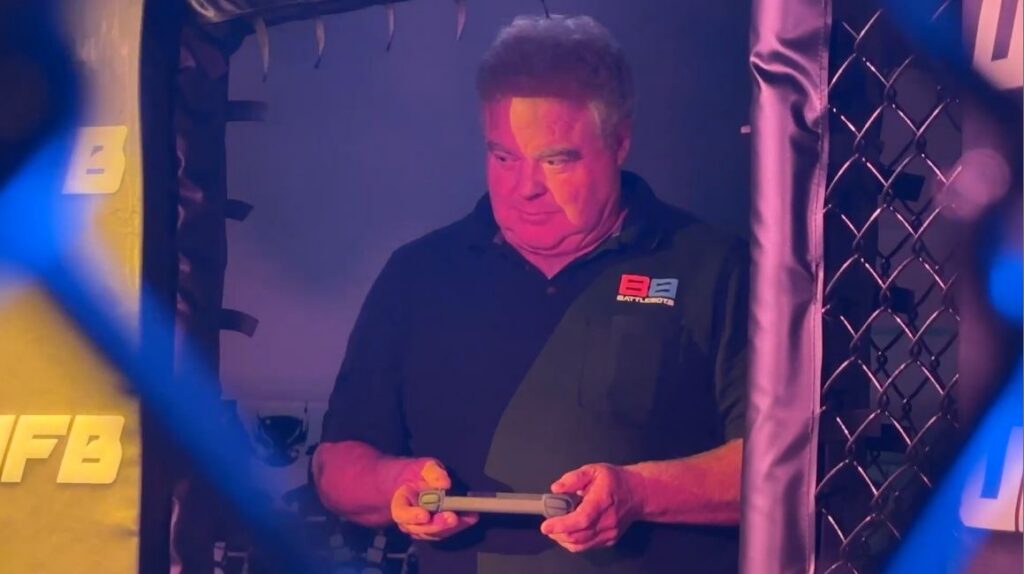
The symbolic weight of that moment is difficult to overstate. The man who helped build robot combat sport’s first mainstream television era competing in its newest iteration. The format BattleBots pioneered — remote-controlled machines fighting each other for audience entertainment — now expressed through humanoid AI bodies controlled by game controllers on a beach in California.
Twenty-five years separate BattleBots’ Comedy Central debut from Ed Roski competing at a UFB event on Venice Beach. The sport has changed beyond recognition. The impulse driving it — humans competing through machines, the engineering and strategy of one builder tested against another — is identical.
How UFB Differs From URKL and REK
Understanding Ultimate Fighting Bots’ specific position requires understanding where it sits relative to the other two major humanoid robot combat organizations currently operating.
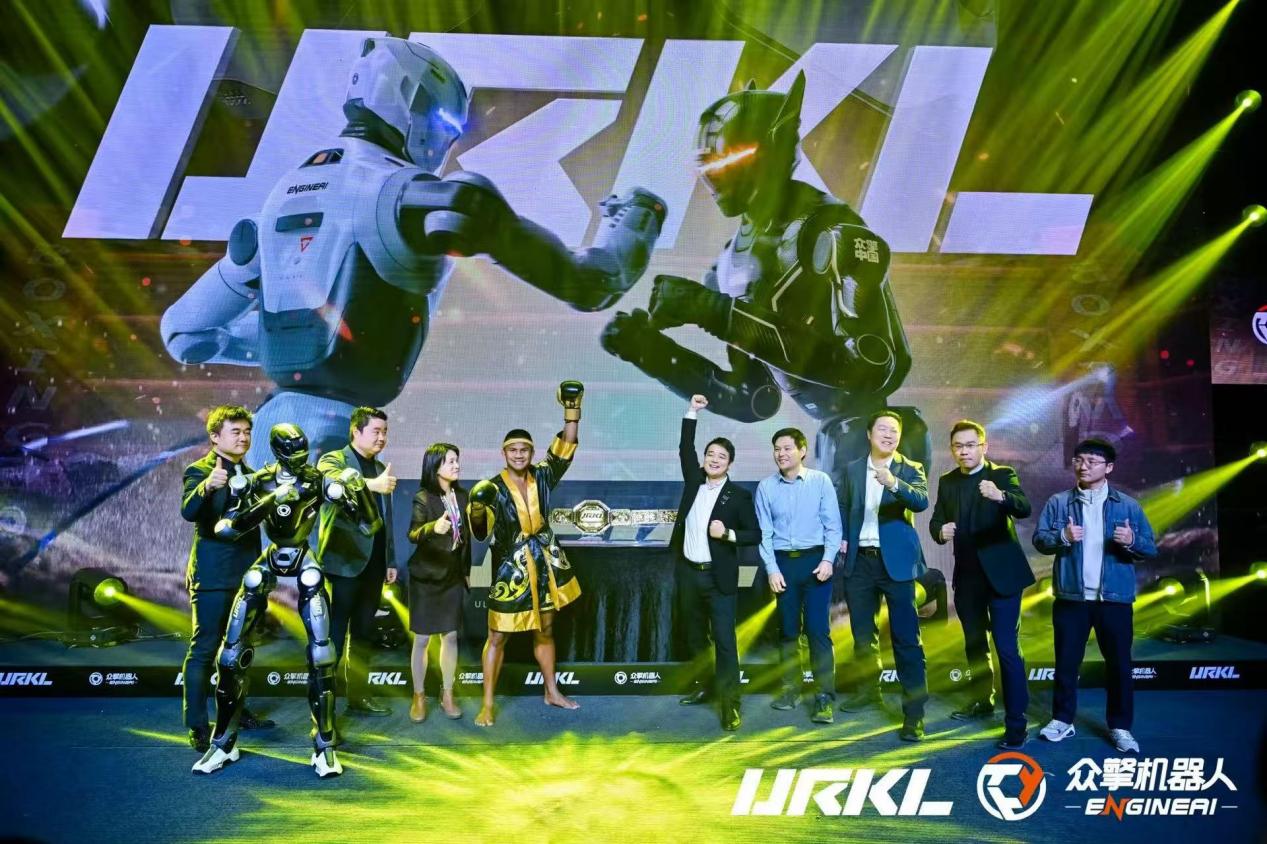
Ultimate Robot Knockout Legend (URKL) — running in Shenzhen since February 2026 — removes the human from the equation entirely. Fully autonomous robots fight with no pilot input during bouts. The competition is between AI systems, not between human pilots. URKL’s position on the competitive spectrum is maximum autonomy.
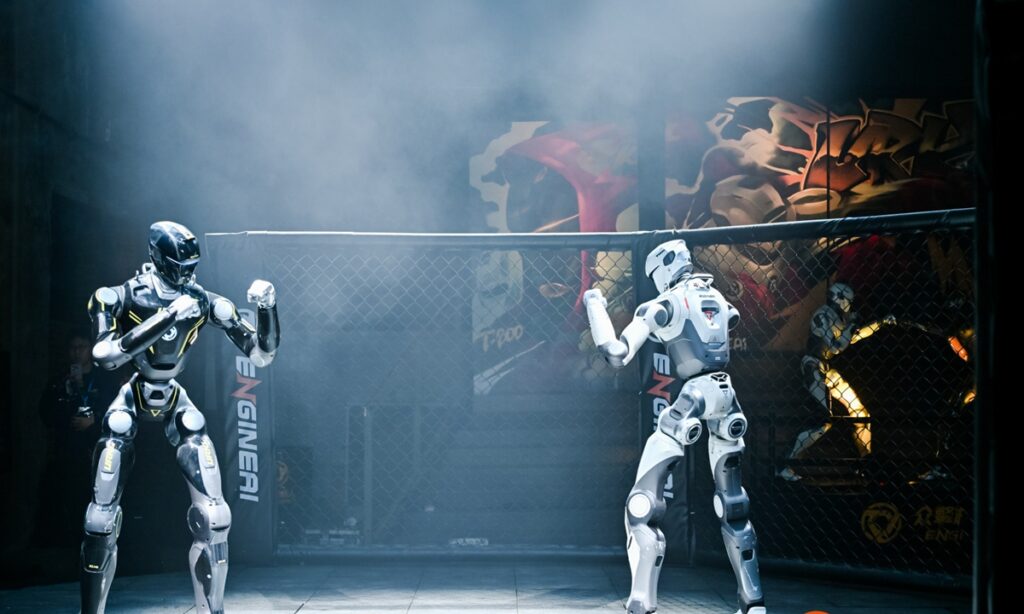
REK — operating in San Francisco — places the human pilot at the centre through VR embodiment. The pilot wears a headset and motion controllers, inhabiting the robot rather than operating it remotely. The experience is designed to feel like being inside the machine. REK’s position is maximum immersion.
UFB occupies the accessibility position. The pilot is present but remote. The interface is familiar — a standard game controller rather than specialist equipment. The barrier to entry is the lowest of the three formats. UFB’s position is maximum participation.
These aren’t just different control philosophies. They represent three different answers to the question that has faced robot combat sport since MegaBots went viral in 2017 and then went bankrupt: what should this actually be? A pure sport decided by AI capability? A performance art decided by pilot embodiment? A mass participation competitive game decided by whoever picks up the controller?
UFB’s answer — participation over exclusivity, accessibility over spectacle, the game controller over the VR headset — is the most democratic vision of robot combat sport currently being built anywhere in the world.
Whether democracy or spectacle ultimately wins the audience is the question the next few years will answer.
Where UFB Is Heading
UFB Season 1’s three Bay Area events in summer 2026 represent the organization’s first structured competitive season — a deliberate step from event-by-event standalone shows toward a format with standings, progression, and the accumulated narrative that sports seasons generate.
Bulatov has been explicit about the long-term ambition: UFB is not building a novelty event circuit. It is building the infrastructure for a new sport — one where the competitive format, the pilot community, the training tools, and the AI development ecosystem develop together rather than in isolation.
The Formula One comparison she and Cix independently reached is instructive in a specific way. Formula One didn’t become Formula One in its first season. It built its identity, its audience, its competitive infrastructure, and its cultural meaning across decades of iteration. The engineering lessons from one season fed the next. The competitive drama generated its own storytelling. The sport and the technology developed each other.
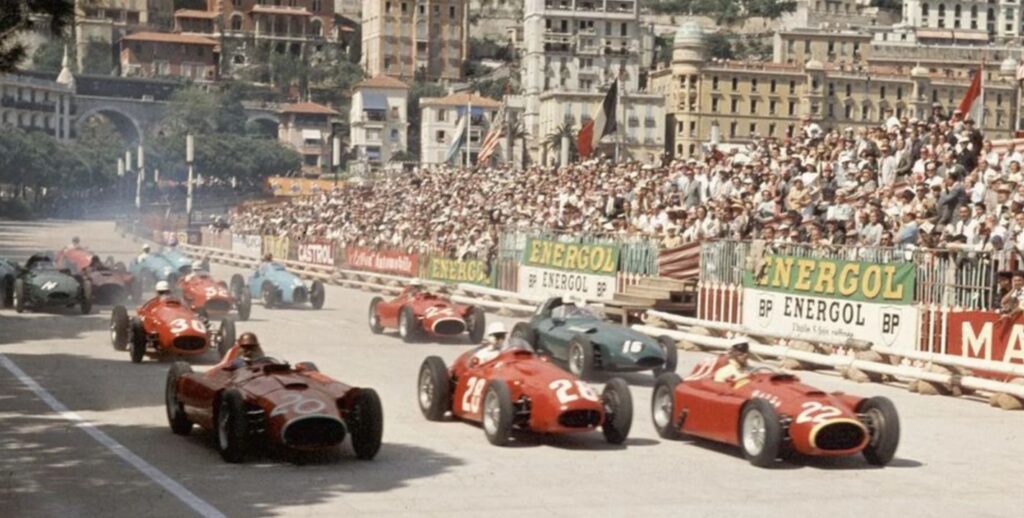
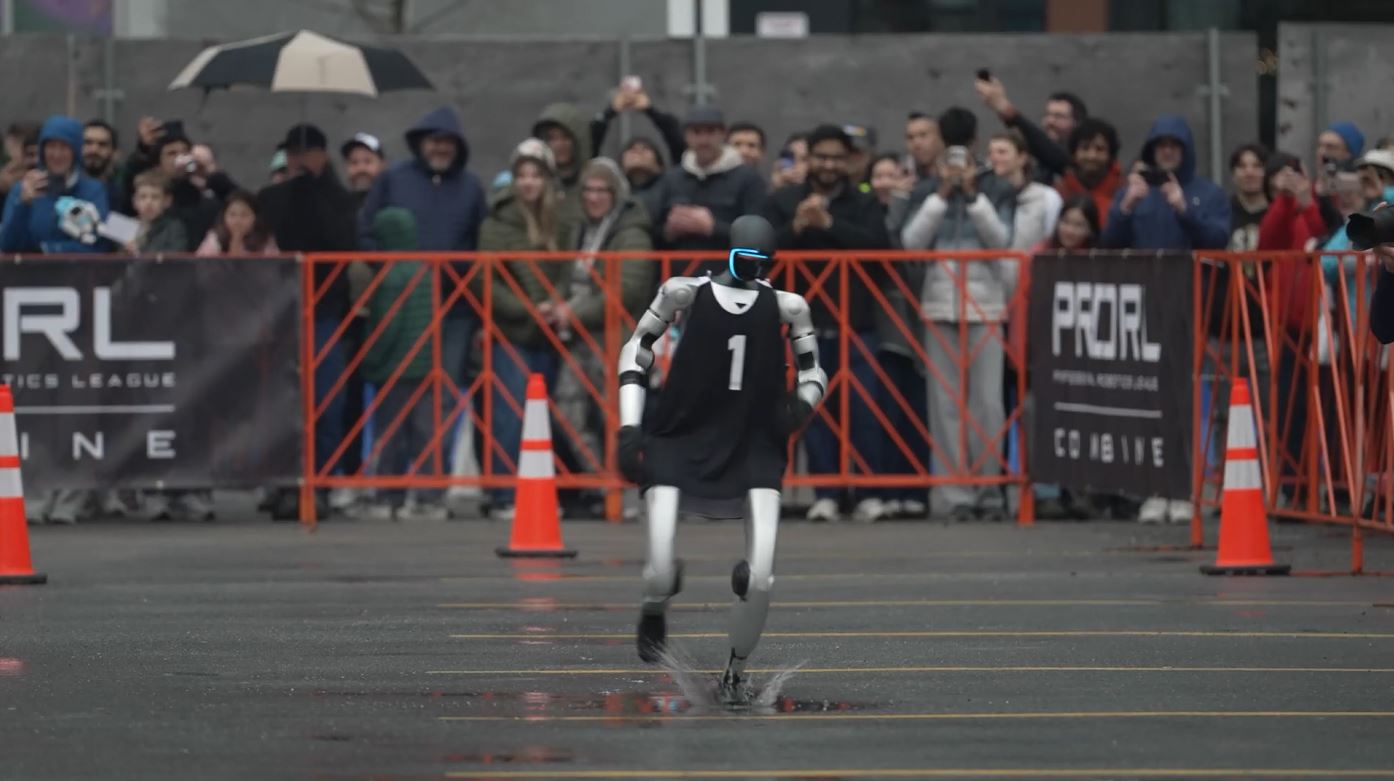
UFB is at the beginning of that process. Season 1 is the founding moment — the same role ProRL’s April 19th Boston Combine played for professional humanoid racing on the East Coast. The organizations that survive this founding moment and continue building will define what robot combat sport looks like when the mainstream audience finally arrives.
RoboSports Global will be covering Ultimate Fighting Bots’ development as Season 1 progresses and beyond.