The story of robot combat sport doesn’t begin in a television studio or a venture capital boardroom. It begins at a science fiction convention in Denver, Colorado, on October 28th, 1989 — with a folding table, a one-cubic-foot weight limit, and a group of mechanical engineers who had absolutely no idea what they were starting.
That event was called the Critter Crunch. What followed was thirty-five years of innovation, television spectacle, legal battles, bankruptcy, underground survival, and — eventually — something that looks nothing like what those Denver engineers imagined, but traces directly back to them.
Video Overview (24:18 Mins)
The Denver Mad Scientist Club and the Critter Crunch
The Critter Crunch was organized by a group called the Denver Mad Scientist Club at MileHiCon — a science fiction and fantasy convention that still runs today. The rules were deliberately simple: robots had to fit within one cubic foot and weigh no more than twenty pounds. The arena was a folding table. Spectators stood close enough to occasionally catch a stray flamethrower blast or a pneumatic ram that had no business pointing in their direction.
It was chaotic and slightly dangerous, but it was the first robot combat competition in history.
The Critter Crunch still runs today — a continuous lineage from 1989 to the present that most people covering robot combat have never mentioned. That continuity matters. The sport didn’t emerge fully formed from a television production company. It grew from a community of builders who had been doing this in borrowed convention space for years before anyone thought to put it on television.
Marc Thorpe and the Vacuum Cleaner That Changed Everything
Three years after the Critter Crunch, a San Francisco animatronics designer named Marc Thorpe was working on a remote-control vacuum cleaner in his workshop. The device wasn’t cleaning anything particularly well. It was, however, demonstrating a remarkable talent for destroying things.
Thorpe had spent fifteen years at Industrial Light & Magic — George Lucas’s special effects company — building creatures and mechanical systems for films including the Star Wars franchise. He understood spectacle. He understood how audiences responded to things that moved in unexpected ways. And he understood, looking at his malfunctioning vacuum cleaner, the potential in front of him.
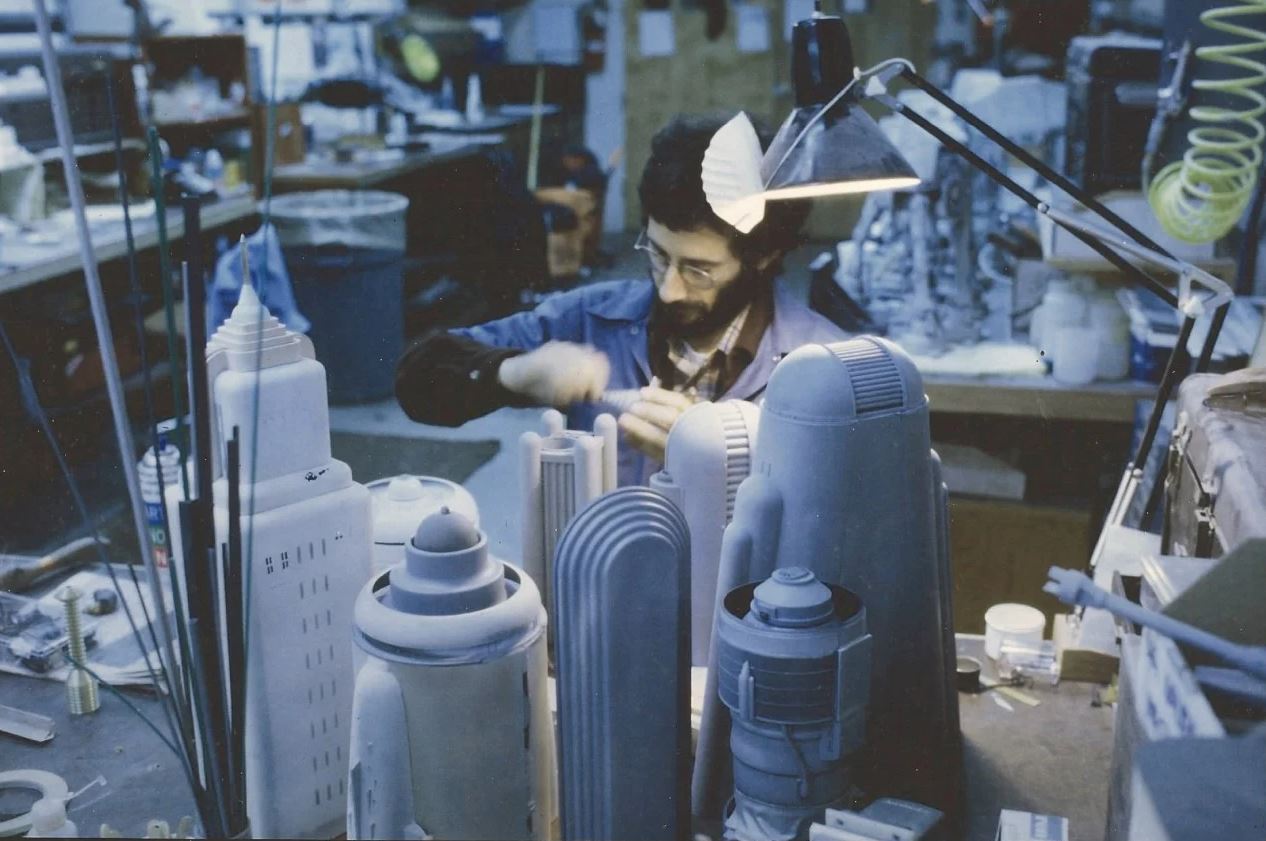
After a 1994 feature in Wired Magazine provided the financial backing he needed, Thorpe launched the first Robot Wars event in San Francisco. The arena was purpose-built. The robots were purpose-built. Competitors included Will Wright — the designer who would later create games including SimCity and the Sims — and a young robotics builder named Mark Setrakian, who had also come through ILM and would go on to play a significant role in the sport’s later development.
Thorpe ran three more events over the following years. Then the lawyers arrived.
His financial backer claimed ownership of the Robot Wars name. A legal dispute that began in 1997 consumed the competition entirely. Thorpe eventually lost the rights to the event he had created. He was inducted into the BattleBots Hall of Fame in 2022 — one year before his death in November 2023. The sport he built from a malfunctioning vacuum cleaner had, by that point, been watched by millions of people worldwide.
He never fully received the recognition his contribution deserved.
Robot Wars UK — Six Million Viewers Every Friday Night
While Thorpe’s legal battles were consuming the American competition, a British TV production company had acquired the television rights to the Robot Wars name. What they built with those rights became one of the most watched shows on British television in the late 1990s.
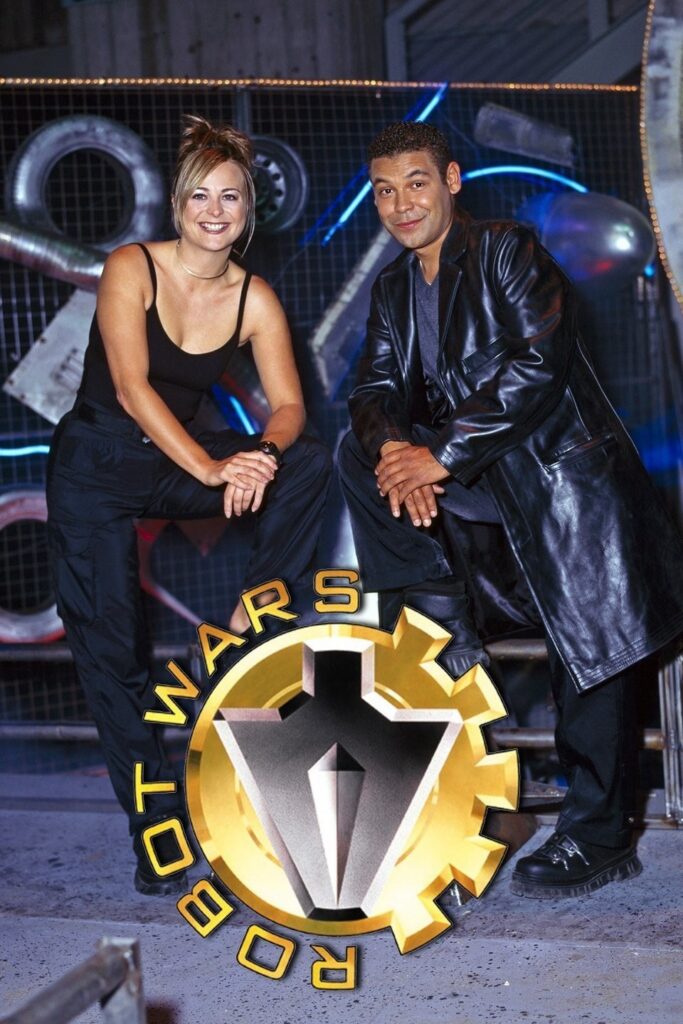
Robot Wars premiered on BBC Two on February 20th, 1998. The first series was hosted by Jeremy Clarkson. The second brought in Craig Charles — who was best known as playing the lead character in BBC’s Sci-Fi comedy show, Red Dwarf.
Robot Wars became the most watched show on BBC Two. Six million viewers. Every Friday night. The series ran until 2004, was revived on BBC Two in 2016, and broadcast across 26 countries over its entire run. For an entire generation of British viewers, Robot Wars was what a robot looked like — and the house robots Matilda, Sir Killalot, Dead Metal and Sergeant Bash became well-loved characters in their own right.
The show’s achievement was architectural as much as editorial. The production company, Mentorn, built a permanent arena in London’s Shepherd’s Bush, that became one of the most recognizable television sets in British broadcasting history. The show wasn’t just a competition — it was a world with its own geography, its own characters, and its own rules that viewers learned and cared about across multiple series.
BattleBots — The Show That Beat South Park
The legal wreckage of Thorpe’s Robot Wars left a community of American builders without a competition. Two of those builders — Greg Munson and Trey Roski, who had competed together with a robot called La Machine — decided to build something new from the rubble.
BattleBots held its first official event in Long Beach, California, in August 1999. A television producer named Lenny Stucker, who had experience of producing boxing matches for HBO, attended that event and immediately saw the TV potential for the format.
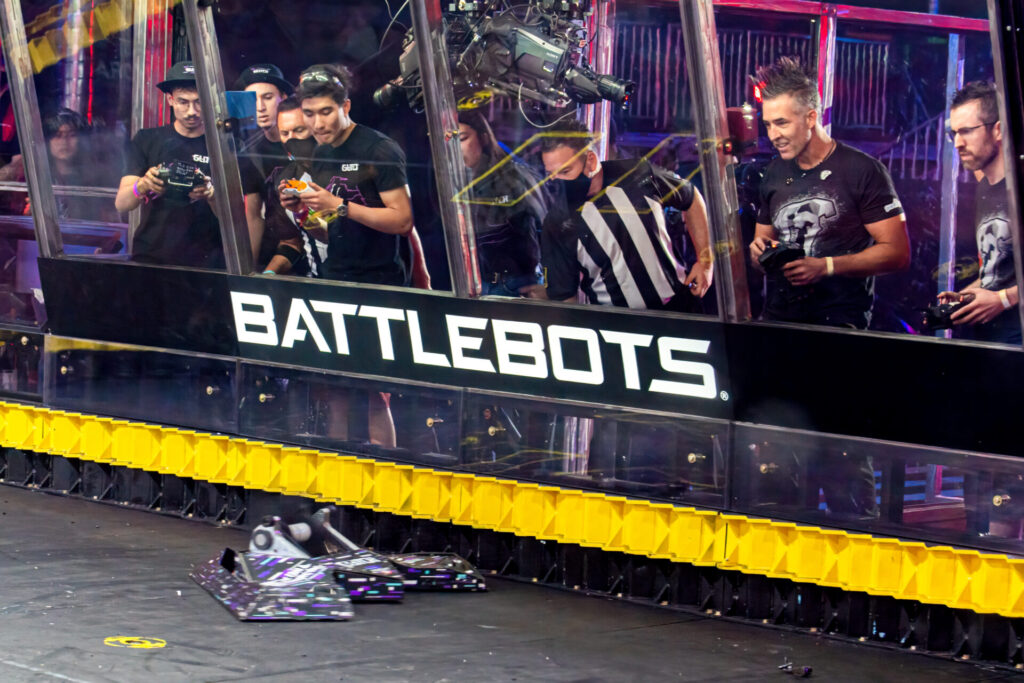
Comedy Central commissioned BattleBots in 2000. The network that had built its identity on South Park and The Daily Show saw BattleBots become its highest-rated programme during third season.
For a few years BattleBots became a true cultural phenomenon in the US, with Jay Leno even revealing his own BattleBot on The Tonight Show. Five seasons on Comedy Central. Robot combat was mainstream American entertainment.
The format eventually reached its ceiling though. The fundamental engineering challenge — destroy your opponent before they destroy you — had been explored thoroughly enough that diminishing returns had set in.
The Underground Years — How the Sport Survived
The end of BattleBots on national television did not end robot combat sport. It pushed it underground — back to the community of builders who had kept it alive before television found it.
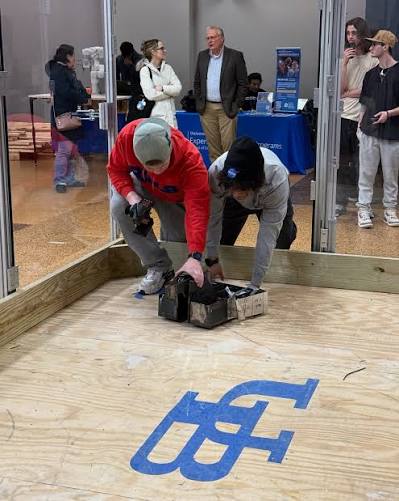
The NPC Charity Open ran in 2004. The Rochester Robot Rampage in 2005. Student-focused BotsIQ competitions continued year after year in school gymnasiums and community centres across the United States. The people who had built robots for BattleBots and Robot Wars kept building, kept competing, and kept recruiting new builders into a sport that had lost its mainstream platform but retained its dedicated community.
This underground decade is largely invisible in most histories of robot combat sport. It shouldn’t be. The builders who maintained the sport through the mid-2000s and into the 2010s without television cameras or prize money are the reason there was a community ready to respond when the revival came. They also represent something worth naming directly: robot combat has a grassroots foundation that predates its television history and has outlasted every individual show that has tried to capitalize on it.
The sport belongs to its builders. The television shows have always been visitors.
Robot Combat League — The First Humanoid Attempt
In 2013 — one year after the film Real Steel (2011) had demonstrated to Hollywood that audiences wanted to see humanoid robots fight — The Syfy channel moved to create the premises in reality.
Robot Combat League ran for nine episodes on the Syfy network beginning February 26th, 2013. Twelve teams competed. The robots stood eight feet tall and weighed approximately one thousand pounds each. Each was controlled by a two-person team: a “robo-jockey” wearing an exosuit harness that translated their arm and torso movements directly to the robot, and a “robo-tech” operating the robot’s leg movements from a seated position using joysticks. The show was hosted by WWE superstar Chris Jericho. George Lucas — whose company had employed both Marc Thorpe and Mark Setrakian decades earlier — appeared as a celebrity guest.
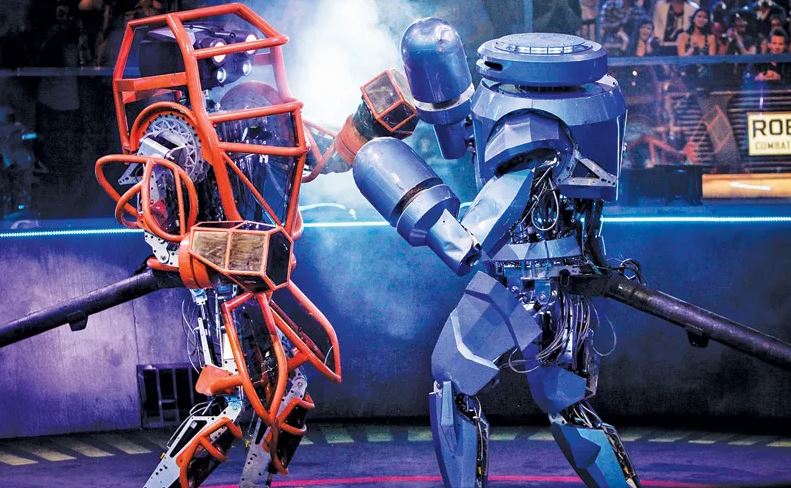
All twelve robots were designed and built by Setrakian himself, the same builder who had won the Robot Wars heavyweight championship in 1995 and spent his subsequent career building animatronic creatures for Men in Black, Hellboy and Hellboy II.
Robot Combat League was as close to Real Steel as anyone had managed to produce. But it clearly had limitations. The robots’ hydraulic systems produced movement that were impressive but noticeably mechanical. The control latency between pilot action and robot response was visible. The sparks that flew during fights were partly added in post-production.
Syfy did not renew it for a second season, but audiences had watched, so the appetite for humanoid robot combat on television was a reality — the technology simply wasn’t ready to deliver it at the quality level the format demanded.
Twelve years later the technology was starting to catch up.
What Came Next
BattleBots returned to television in 2015 on ABC and then Discovery Channel from 2018 — better produced, more sophisticated robots, a passionate returning fanbase. The format worked well enough but had not fundamentally changed from what Comedy Central had aired fifteen years earlier.
What changed everything happened in China.

In January 2018, a production company called TheMakers launched King of Bots on Zhejiang TV. Three months later they followed it with This Is Fighting Robots on Youku. The format was familiar — robot combat, celebrity managers, heavyweight machines. The scale was not. By the end of 2018, This Is Fighting Robots had accumulated 1.8 billion views on Youku alone.
The sport that Marc Thorpe had started in a San Francisco warehouse in 1994, that had peaked on Comedy Central in 2001, that had survived a decade in school gymnasiums and community centres, had become one of the most watched entertainment formats in the world’s most populous country. Neither show produced a second season. But what they proved — that the appetite for robot combat entertainment was genuinely global, genuinely massive, and genuinely applicable to cultural contexts completely different from the one that had created the format — mattered enormously for what came next.
The country that produced 1.8 billion views of wheeled robot combat in 2018 is the same country running the world’s most advanced autonomous humanoid combat league in 2026. That’s not a coincidence.
The second part of this series covers what happened next — the emergence of autonomous humanoid combat, three competing American organizations, and what robot combat sport looks like in 2026. Read it here.