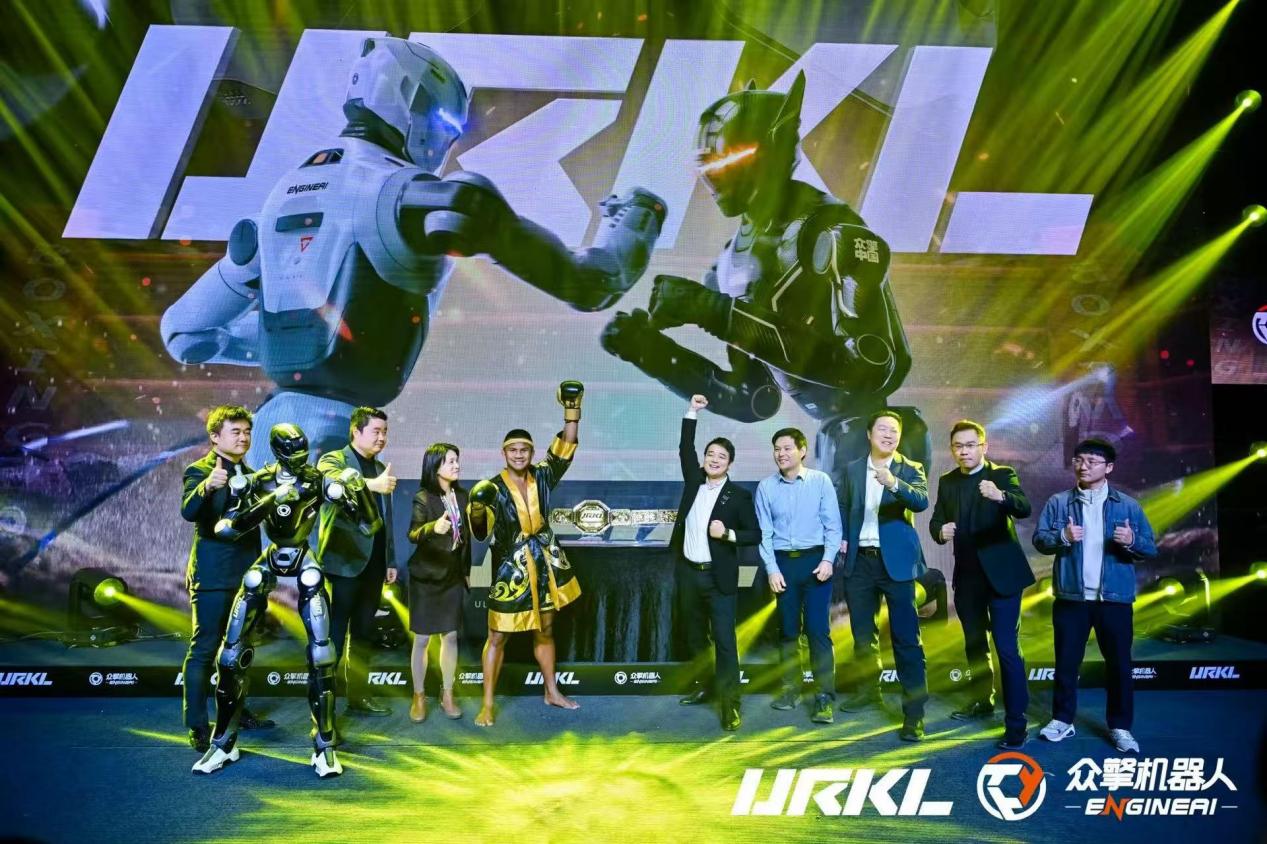
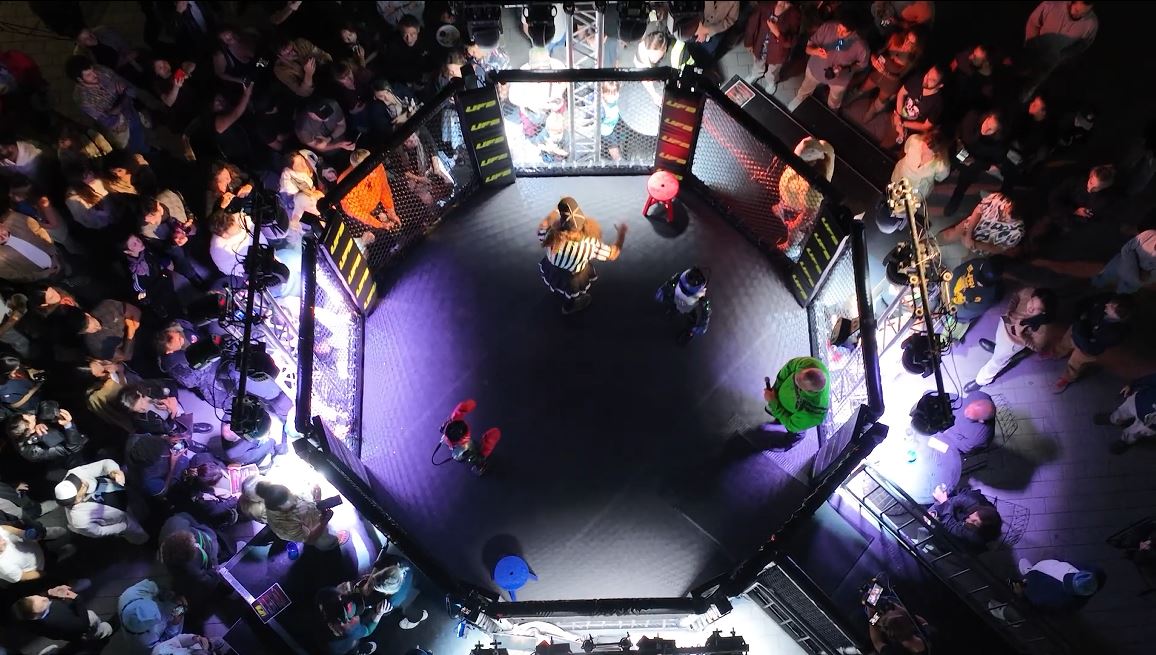
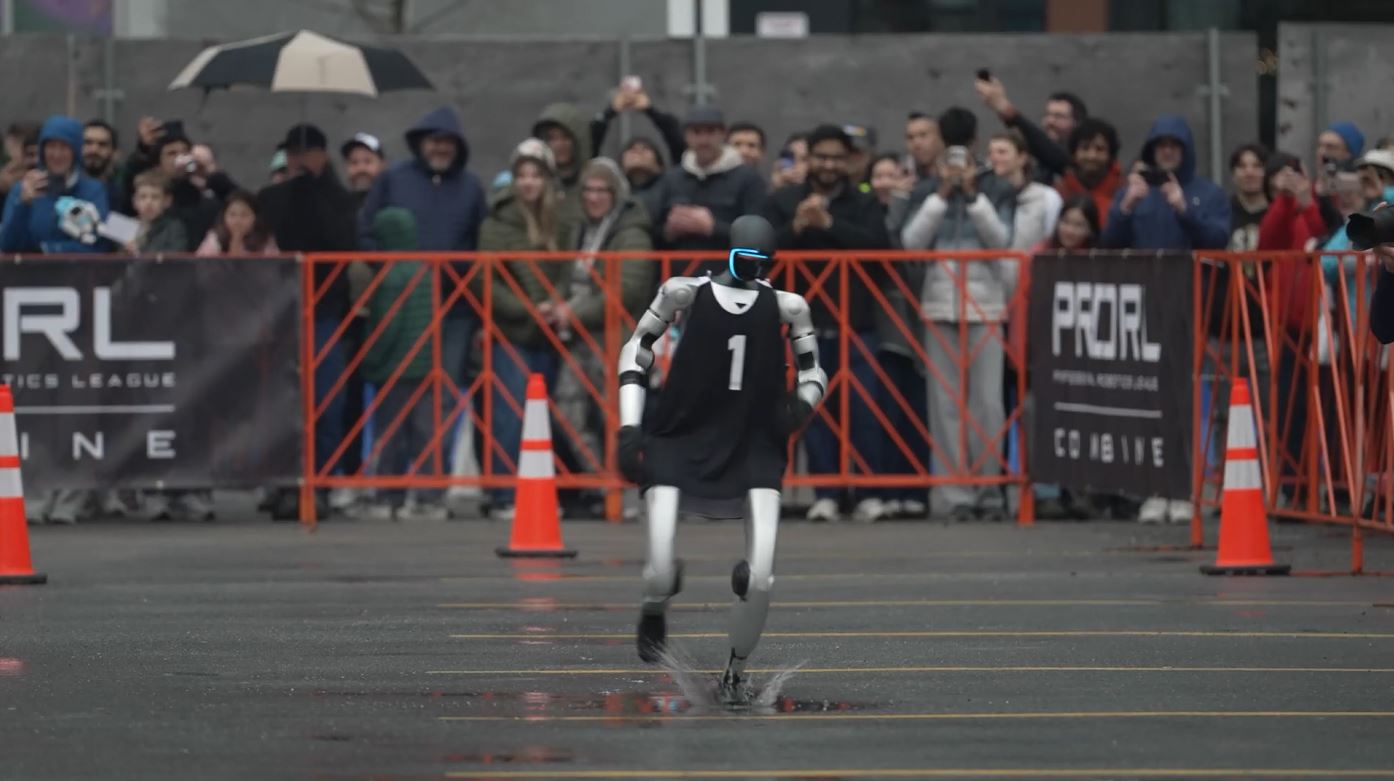
In 2011, the film Real Steel imagined a world where giant humanoid robots had replaced human boxers as the world’s premier combat sport. Hugh Jackman played a washed-up robot boxing trainer trying to rebuild his career. The film grossed $299 million worldwide. Audiences responded to it not as science fiction, but as something they instinctively wanted to experience in reality.
Fifteen years later, in a warehouse in San Francisco, a man who goes by Cix is making it real.
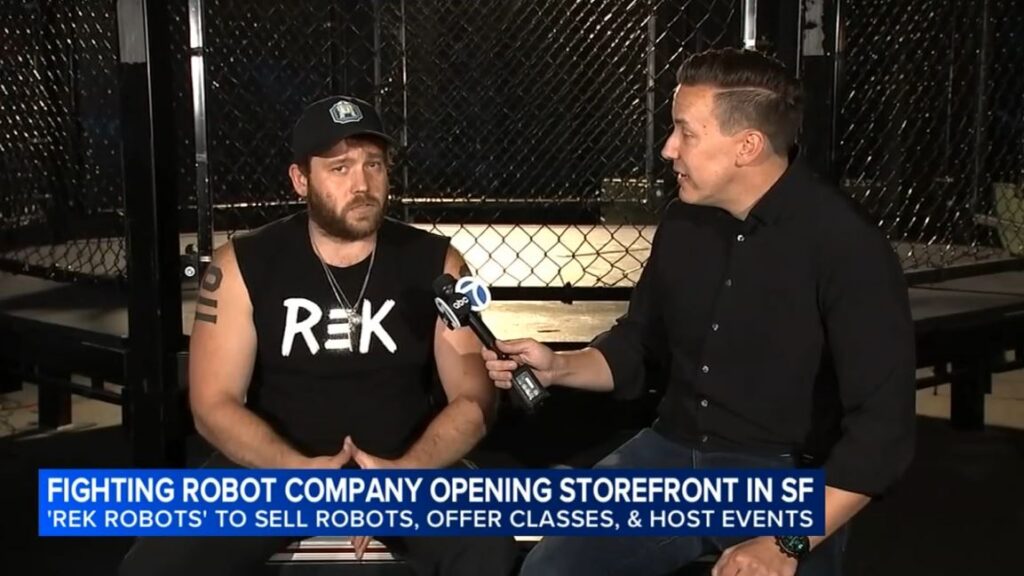
His organization is called REK — Robot Entertainment Kombat. And the robots fighting in his cage are no longer science fiction.
Video Featuring REK (Starting 17:07 mins)
Who Cix Is and Why He’s Building This
The founder and “Chief Robot Fighter” of REK was born with a different name. After his identity was stolen in his twenties, he made a decision that most people would find unusual: rather than reclaiming his old identity, he legally adopted the name of his online persona from years of MMO gaming. Six — later stylized as Cix — had been his raid-leading character, a persona he described as “courageous, someone who could take on the world.” The legal name on his documents now matches the character he decided he wanted to become.
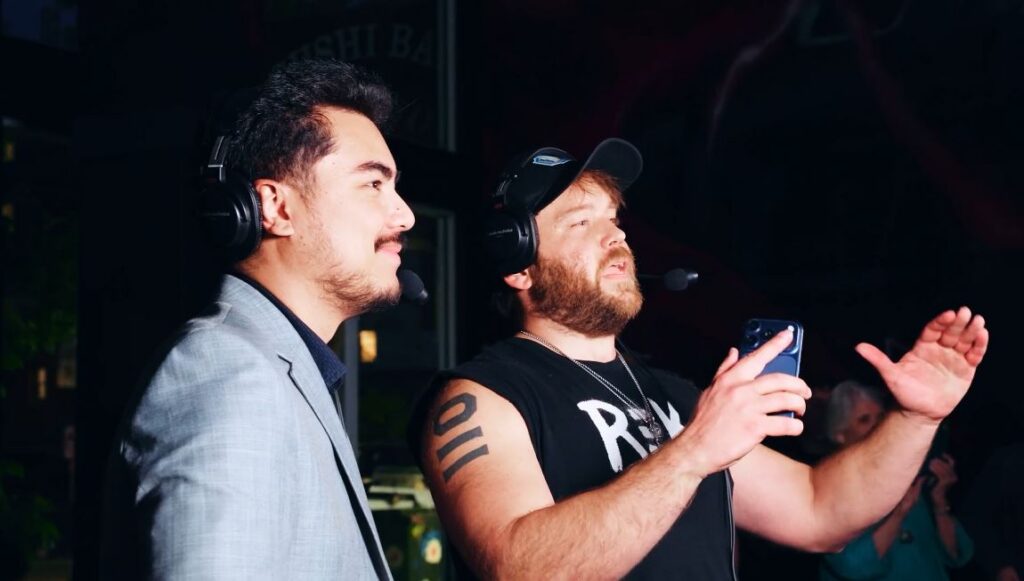
That detail matters for understanding REK. This isn’t a company built by a venture capitalist who identified robot combat as an underserved market. It’s built by someone whose entire personal narrative is about inhabiting a role — becoming the character rather than just playing one. The philosophy of REK, in which human pilots inhabit robot bodies through VR control systems, reflects something genuinely personal about its founder.
Cix grew up on Lookout Mountain in Colorado, socially isolated, with video games as his primary social world. He describes games as having raised him. The jump from gaming to robot combat isn’t, in his view, a leap at all — it’s a continuation of the same instinct that made him a raid leader in an MMO: creating competitive experiences that feel genuinely high-stakes.
What Robot Entertainment Kombat (REK) Actually Does
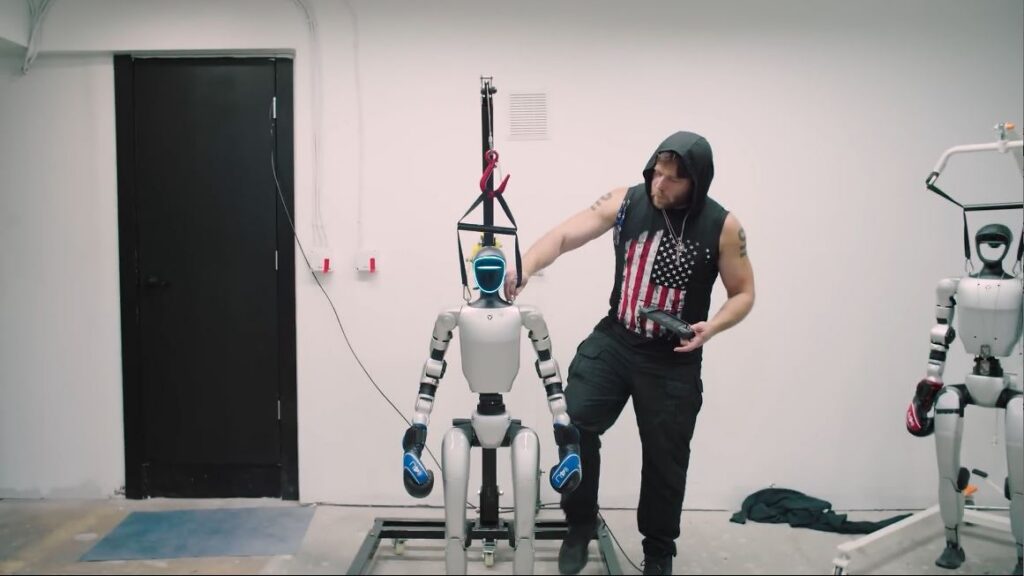
REK runs humanoid robot fighting events in San Francisco, with a growing presence across other US cities. The organization has been operating for just over a year — the first Unitree H1 robot arrived in January 2025, and the first public event took place in September 2025.
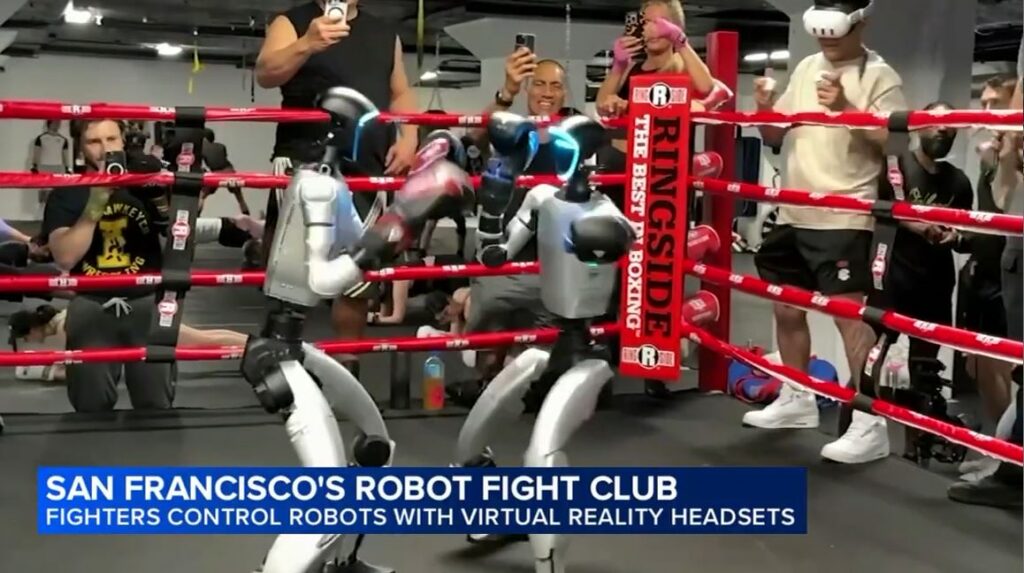
The fighting format is built around pilot embodiment rather than remote control. REK pilots wear VR headsets and arm-mounted motion controllers. The experience isn’t operating a machine from outside — it’s designed to feel like inhabiting the machine. What the pilot does, the robot does, with pre-trained movement policies determining how each action actually executes.
That last technical detail is important and often misunderstood. Richard England, the UK-based technologist who built REK’s control systems remotely from 5,000 miles away in London, has explained the architecture clearly: pure teleoperation — the robot mirroring the pilot’s exact movements in real time — proved “very challenging in many ways.” What works is a hybrid: the pilot triggers pre-trained movement policies built through reinforcement learning, which then execute with their own learned fluency. The pilot provides intent. The reinforcement learning provides execution. The result is robot movement that looks significantly more fluid and athletic than direct teleoperation could produce.
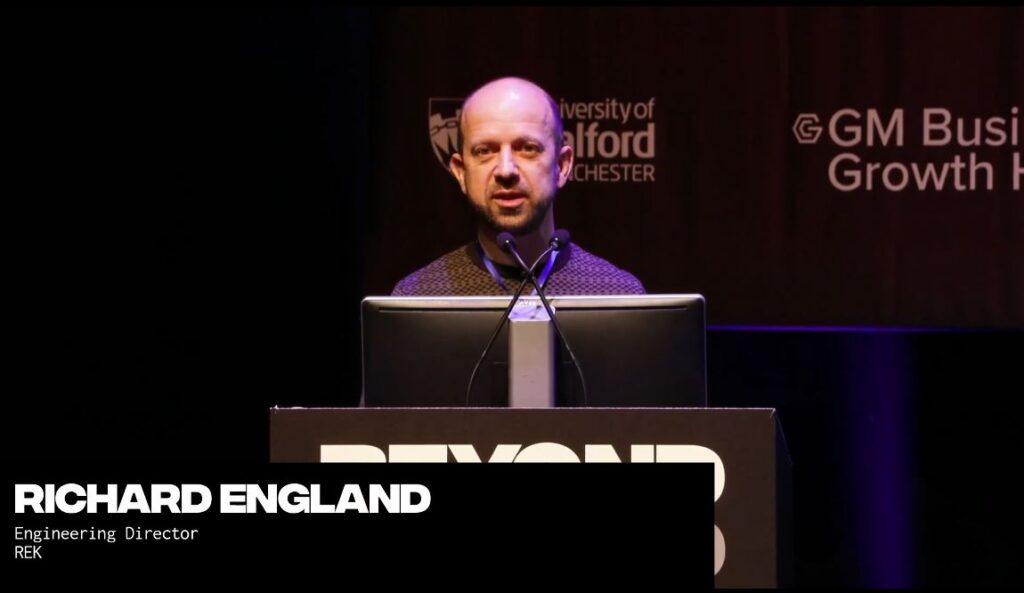
England came to this project with no robotics background. His prior work spanned immersive art installations with David Hockney, VR scouting for a Marvel film production, and accessibility consultancy using games technology for non-gaming applications. He built REK’s combat control systems entirely remotely, working with robots he couldn’t physically touch, 5,000 miles from where they were operating. The entire REK control architecture was developed this way — distributed, improvised, built by people applying expertise from adjacent fields rather than robotics specialists.
This is, in England’s own framing, how most genuinely new things get built.
The EngineAI T800 Robot — America’s First
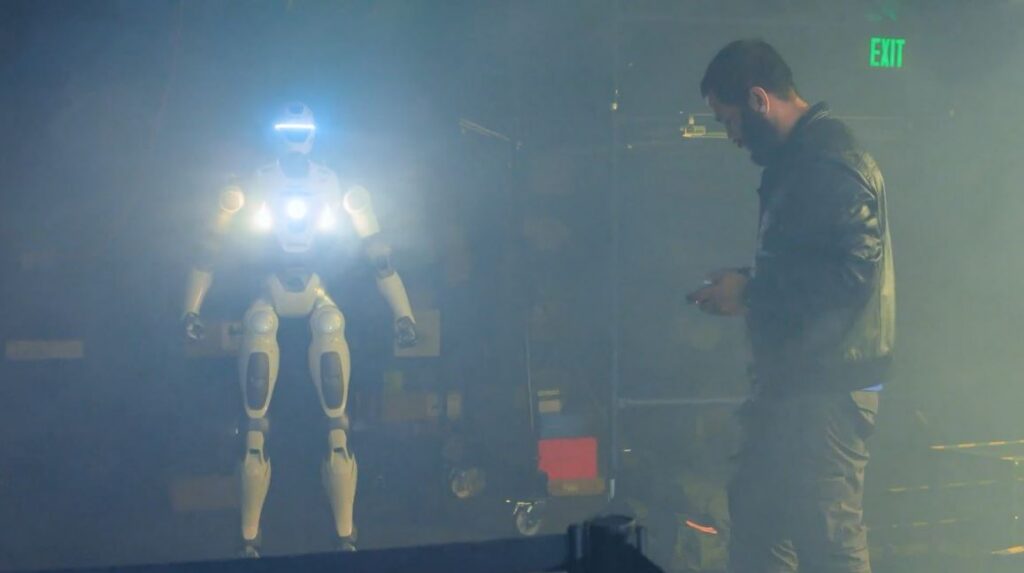
In June 2026, REK unveiled a new fighter at a warehouse event covered by ABC7 San Francisco. The robot was a six-foot EngineAI T800 — the first robot of its kind imported to the United States.
It didn’t arrive for a factory. It didn’t arrive for a research programme. It arrived to fight.
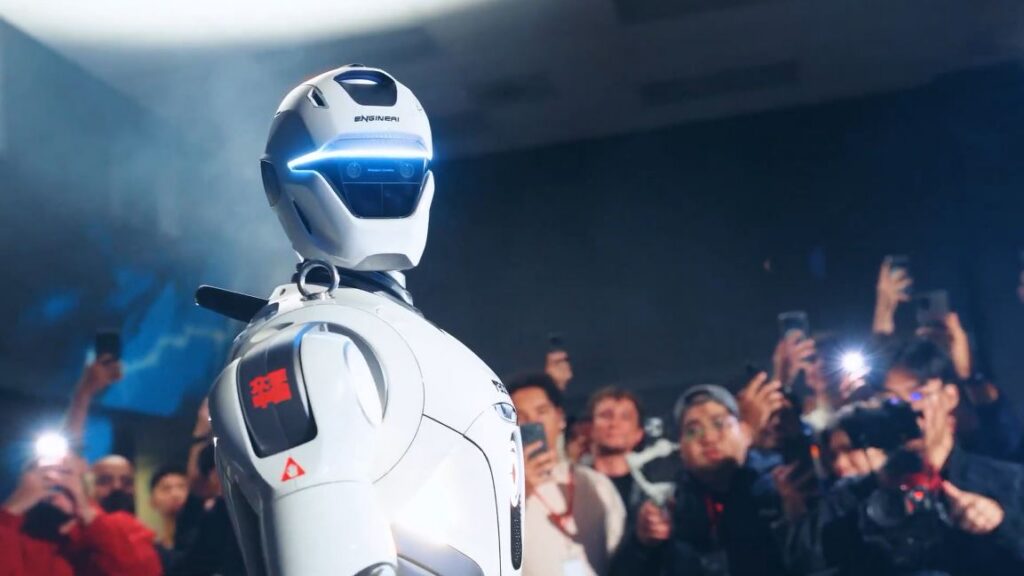
The T800’s physical presence is qualitatively different from the Unitree H1 machines REK had been using in its earlier events. Previous REK robots stood four and a half feet tall. The T800 stands six feet — roughly the height of a large professional human fighter — and operates at a weight and speed that changes the nature of what’s happening in the cage. Cix described the impact of a T800 strike with unusual directness: “like a motorized bat going 100 miles per hour.”
Audience members at the June event responded to the T800 with reactions that consistently referenced science fiction. “It’s Iron Man — you cannot tell me that’s not Iron Man right there,” said Kamran Karic, a San Francisco resident attending his first REK event. Karmen Leung framed it in longer context: “People have been talking about robots for many decades. It’s very cool to finally see it come into fruition.”
The sound and physical presence of the machine was cited repeatedly by attendees as something video footage doesn’t communicate. Cix noted this specifically: it’s the weight, the sound, and the physical proximity that registers most powerfully when you’re in the same room as a fighting robot. That dimension — the embodied experience of being near one of these machines — is the one thing that separates a live REK event from watching footage online.
The Robot Storefront Model — Sport as Infrastructure
Beyond the fighting events themselves, REK is opening a permanent storefront in San Francisco that functions as a comprehensive humanoid robot operation centre. Visitors can watch robots perform, attend classes on how to walk and programme humanoid machines, rent robots for their own purposes, purchase them outright, and bring existing machines in for maintenance and repair.
The model has a direct structural parallel with ProRL on the East Coast — two organizations, in different cities, independently arriving at the same insight: that sport generates the public excitement that makes a humanoid robot service business viable, and that a service business generates the technical competence and hardware access that makes the sporting events better.
REK’s storefront is, in Cix’s framing, a robot gym as much as a robot shop. The community of pilots, engineers, and enthusiasts who build around the events is also the community that learns to maintain, modify, and eventually build robots. The competitive ecosystem and the technical ecosystem develop together.
The Philosophy — WWE or UFC?
The most important strategic question facing every organization building robot combat sport is one that MegaBots — the giant robot duel company that went viral in 2017 and subsequently went bankrupt — never answered clearly: is this WWE or UFC?
Scripted entertainment theatre, built around spectacle and narrative, where the outcome serves the story? Or genuine athletic competition, where the best pilot wins regardless of drama?

REK’s answer is closer to UFC than WWE — the fights are real, the outcomes are not predetermined, the pilots’ skill determines the result. But REK also understands that pure competition without spectacle doesn’t build audiences at the pace the business requires. The warehouse atmosphere, the walk-on theatrics, the robot naming conventions – these are deliberate entertainment production choices wrapped around a genuine competition.
Cix has articulated a more fundamental reason for keeping the human pilot central to the format, beyond just entertainment value: “When someone looks at a humanoid robot, they imagine a human in its place. And that emotional connection — and the type of media you can create out of that — is just significantly more valuable.” He discovered this insight accidentally, after posting a video of himself hitting a robot with a pillow. The comments were full of people emotionally invested in the robot’s wellbeing. He recognized immediately that he’d found something that went beyond spectacle.
Mark Setrakian — who built Robot Combat League for SyFy in 2013, the first humanoid robot combat television show — said explicitly that he intended to keep his robots free of internal intelligence, because the human pilot’s soul was what made the format emotionally meaningful. REK’s hybrid control system — human intent, AI execution — is a more sophisticated answer to the same question Setrakian was grappling with twelve years ago. The human pilot remains essential. The AI makes the pilot better. Neither replaces the other.
Where REK Is Heading
Cix has described REK’s development in three stages. The first — current — involves REK purchasing robots directly and running everything in-house, building the format and the community simultaneously. The second involves direct manufacturer partnerships, with robots supplied under value-exchange arrangements and branded matchups between different manufacturers’ machines. The third, longer-term vision is an open competitive ecosystem where independent builders can create their own robots — analogous to how motorsport eventually developed beyond manufacturer-only racing into independent team and builder participation.
He uses Formula One as the comparison, which is the same comparison Xenia Bulatov of UFB (Ultimate Fighting Bots) uses independently. Two founders of competing robot combat organizations, in different cities, reaching for the same analogy. That convergence is worth noting; it isn’t coincidental rhetoric. It reflects a genuine belief, shared across the current generation of robot combat sport builders, that competitive sport is the right infrastructure model for accelerating robotics development — in the same way that Formula One accelerated automotive engineering beyond what purely commercial development would have produced.
REK’s hardware expansion is also continuing. In July 2026, a livestream preview of the under-construction San Francisco store featured the Agibot Expedition A3 — a 173-centimetre, $45,000 performance humanoid from Shanghai-based Agibot, the world’s highest-volume humanoid manufacturer — performing a high-energy dance routine in REK’s cage. REK’s Marketing Director Nicky confirmed the A3 will be available in the REK store from August 2026.