
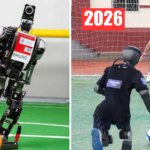
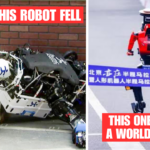
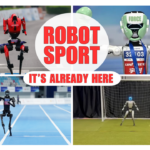
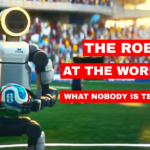
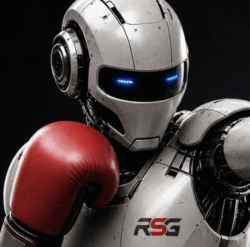
By the time the FIFA World Cup kicked off at the Estadio Azteca in Mexico City, a video of a robot watching football had already been viewed 140 million times. Most of those viewers saw it as a feel-good World Cup story — a humanoid machine studying the beautiful game, watching past World Cups, and then apparently inspired by what it saw, wanting to learn itself.
Video Explaining the Full Story (8:28 mins)
The Boston Dynamics / Hyundai Campaign
Hyundai Motor, an official FIFA partner for the 2026 tournament, released School of Football over two weeks leading up to the opening game. The five-part series followed Boston Dynamics’ Atlas robot through a focused training program; where the robot actually did learn how to play.
The series was produced with care and high production value. Atlas was shot with the visual language of a sports documentary — considered framing, cinematic lighting, the robot’s ring-light head shifting colour as if registering emotion.
Hyundai wanted viewers to feel Atlas was genuinely captivated by football. The production achieved that, and the view count reflects it (currently sitting at over 160 million views at time of writing).
The final episode is where the true robotics breakthrough was demonstrated.
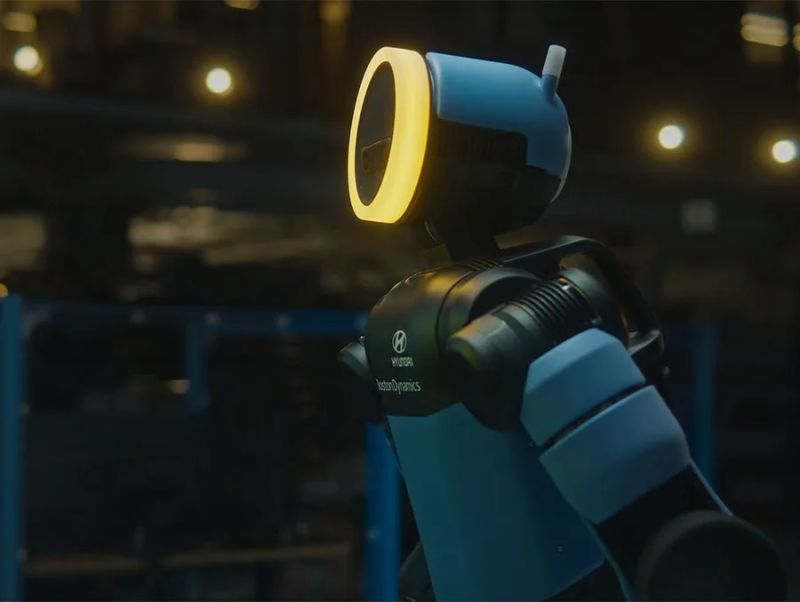
The Atlas Robot Learning the Ghost Rabona Kick
The skill Atlas performed in that closing episode is called the Ghost Rabona, which differs slightly from the standard Rabona kick. The basic kick is a cross-legged strike, where the player wraps the kicking foot behind the standing leg, before making contact with the ball.
Executed correctly, it generates an unexpected angle of attack that opponents often struggle to read. The ghost variant adds a further layer of deception, disguising the intended direction of the shot until the very last moment.
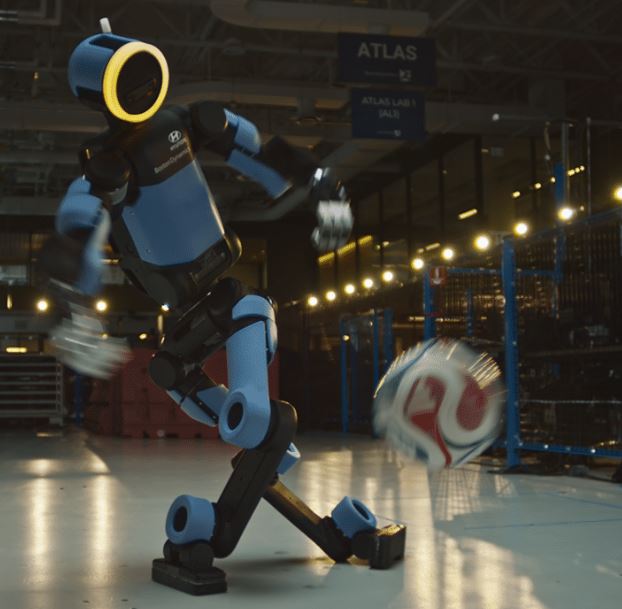
The complex move requires a level of balance and spatial coordination that most players never fully develop. Elite players attempt it in matches occasionally. Most fail to execute it though.
Hyundai confirmed that no CGI or special effects were used anywhere in the School of Football series. Atlas is shown training to perfect the trick shot, and eventually performing the completed Ghost Rabona, in real time, on camera.
The Science Behind Atlas Learning the Football Trick Shot
The technical question being asked is; how was this skill actually acquired? Atlas didn’t practice on a training pitch for months, or years, like the world’s professional footballers have to. The move wasn’t hand-coded by engineers programming each joint angle and weight shift in sequence.
Instead, Boston Dynamics trained Atlas using motion capture data recorded from professional footballers, feeding that data into a Reinforcement Learning system — an AI training method where the system attempts a task repeatedly, receives feedback on each attempt, and adjusts its approach based on what worked and what didn’t.
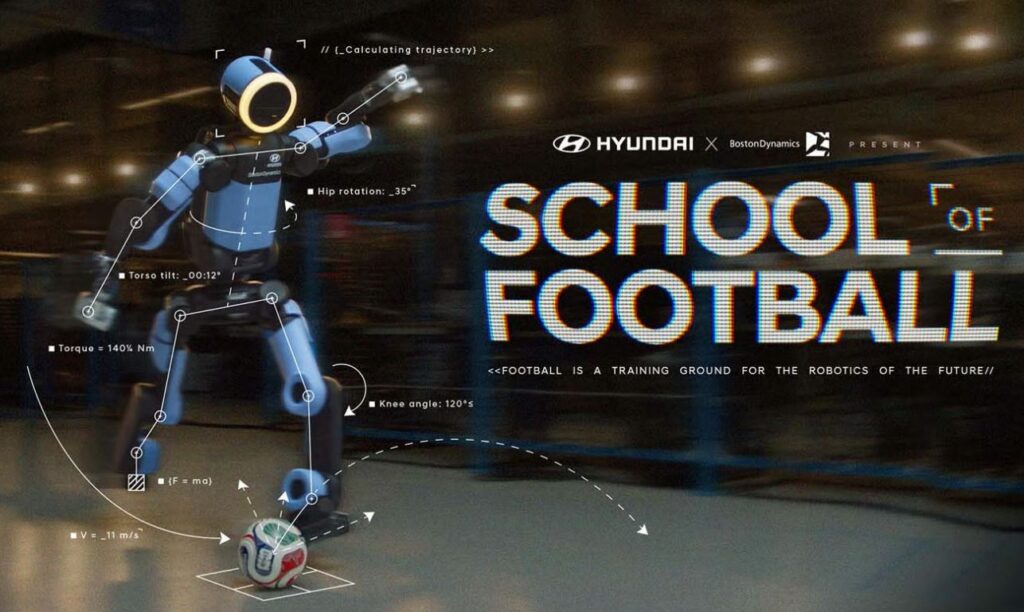
The infrastructure that makes this possible is GPU simulation — the ability to run thousands of simultaneous virtual training attempts at speeds far beyond what physical practice allows. In Atlas’s case the Ghost Rabona required the equivalent of (approximately) one year’s worth of training time. The GPU simulation completed that volume of training in just one single day.
That compression ratio — a year of acquired skill in only twenty-four hours of computation — is a staggering achievement. It applies to football trick shots today, but of course; this same architecture can be applied to any physical skill a robot needs to be trained to perform.
Robots Breaking Sporting Records Across the World
The Atlas campaign arrived at an incredibly significant moment in robot sports history. In the months leading up to the World Cup, several competitive milestones had been hit, with only limited Western media coverage.
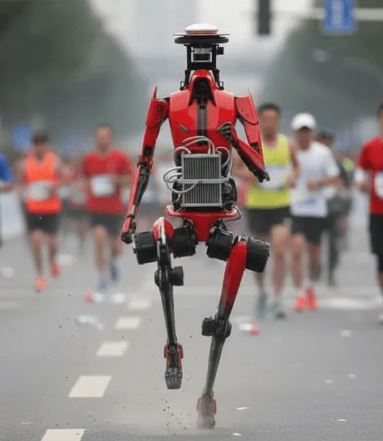
The most striking event came from Beijing, on April 19th, when a humanoid robot called Lightning ran the city’s E-Town half-marathon, as a competitive entrant, alongside 12,000 human runners. Lightning’s finishing time beat the standing human world record by six minutes and 54 seconds. The record, set by Jacob Kiplimo in Lisbon in March 2026, had stood for weeks before Lightning erased it.
A few weeks earlier, Sony’s robotics division published results from a series of table tennis matches between its Ace robot and Miyuu Kihara (ranked as a world top 25 player).
Ace won three of the five matches. The robot’s advantage wasn’t mechanical speed – a purpose-built arm can always swing faster than a human one – Ace won by reading the spin on incoming balls, calculating the trajectory, and then returning with a consistency that reflects genuine tactical competence.
Robot Ring-Based Fighting Competition
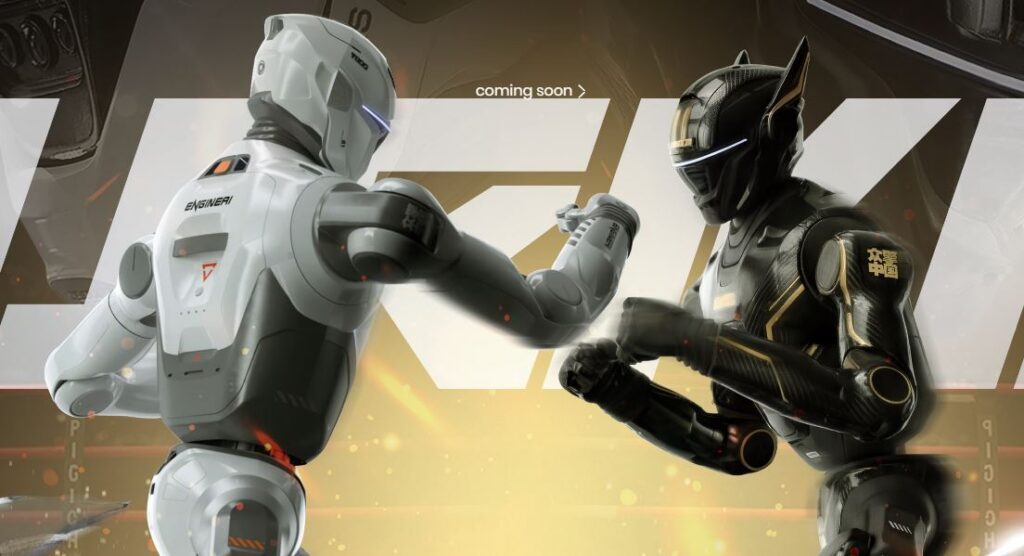
Noticeable robot sporting development in the first half of 2026 have not been limited to marathon running and table tennis though. The Ultimate Robot Knockout Legend — URKL — launched its inaugural competitive season in Shenzhen, China, in the first quarter of 2026, with sixteen teams entering.
The competition runs through until December, when finalists will compete for a prize of 10 million Chinese Yuan (approximately $1.4 million). The league’s organizers (robotic firm EngineAI) describe it as a high-intensity stress test and performance display for their groundbreaking T800 humanoid robots.
Robot’s Very Own Football World Cup Running Since 1997
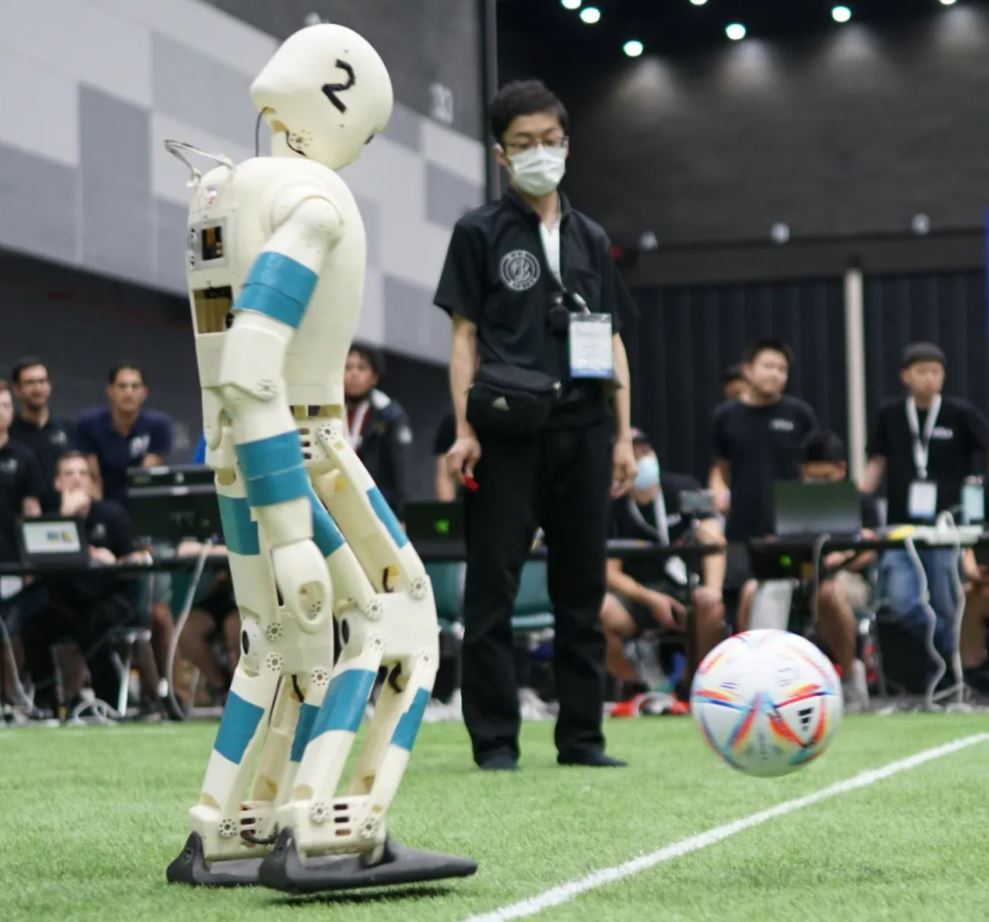
When the founders of RoboCup launched the competition in the mid-1990s, their goal was to develop a team of fully autonomous humanoid robots capable of defeating the reigning human World Cup champions by 2050. At the time, the goal was seen as overly ambitious, even to leading technical minds.
The last twelve months have changed how that timeline reads. A robot has broken the human half-marathon world record. Professional robot combat leagues are paying out seven-figure prize pools. And at the most-watched sporting event on earth, a humanoid robot demonstrated that it could acquire one of football’s most technically demanding skills at breathtaking speed.
RoboCup’s 2050 deadline was set in a world where the iPhone didn’t exist. The pace of development visible in 2026 alone suggests the more interesting question isn’t whether autonomous robots will reach that level of football competence — it’s whether 2050 will turn out to have been a conservative underestimate.
About RoboSports Global
RoboSports Global launched in June 2026 as a dedicated robot sports media outlet, to cover the exciting development of competitive robotic sports — with planned reporting on worldwide robotic sporting events, breakthroughs in technological developments, and discussion on where things are heading.
Video analysis and event coverage is published on our YouTube channel @RoboSportsGlobal and you can follow us on Instagram, X.com and Facebook for updates between videos.
Competition organizers, researchers, teams, and manufacturers interested in media coverage or partnership can reach us at info@robosportsglobal.com.