Ask most people whether robot sport exists yet, and the answer they’ll likely to give is some version of “not really, not seriously.” That answer is already out of date. Across five distinct disciplines — running, football, combat, precision sports and racing — robots are competing, winning, and in some cases beating the best humans in the world. Most of it has happened in the last twelve months. Almost none of it has been covered with any real depth.
Video Overview (8:04 Mins)
Robot Distance Runners Beating Records
The clearest illustration of just how fast robot sport is evolving was shown to the world at the Beijing E-Town Half-Marathon on April 19th, 2026. The race hosted a field of humanoid robots running alongside roughly 12,000 human entrants — not as a sideshow, but as registered competitors.
One of them, a robot named Lightning, built by Chinese company Honor, finished the course in a time that beat the existing human world record by nearly seven minutes. The previous record, held by Jacob Kiplimo, had been set in Lisbon a few weeks earlier.
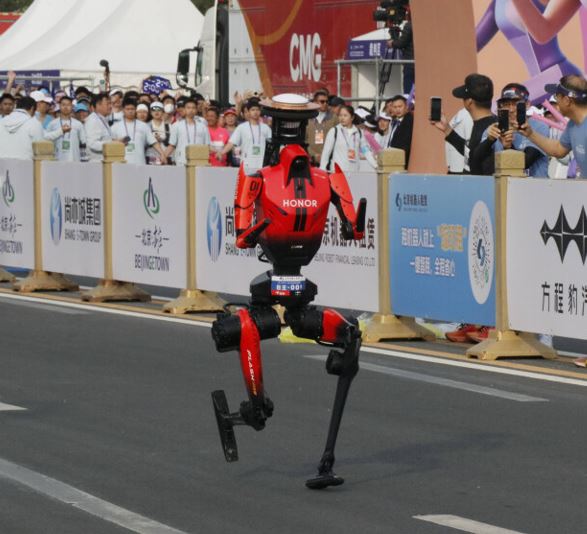
For context on how rapid this progress has been: at the same event twelve months prior, the majority of robot entrants didn’t make it to the finish line at all.
Several fell mid-race and a handful lost components entirely. The leap from “couldn’t finish” to “broke the world record” happened inside a single year.
That same weekend, on the other side of the world, a separate but related milestone passed almost unnoticed. The Professional Robotics League — ProRL — held the first professional robotics sporting event on American soil, in Boston’s Seaport District.
Hundreds of people turned up to watch humanoid and quadruped machines race and navigate obstacle courses. A single preview piece ran in Forbes a few weeks beforehand, but media coverage afterward the event was effectively nonexistent.
Robot Football – From Skill to Power
If one sport has given the public a genuine (if partial) glimpse into robot sport, it’s football — though most viewers likely missed what they were actually watching.
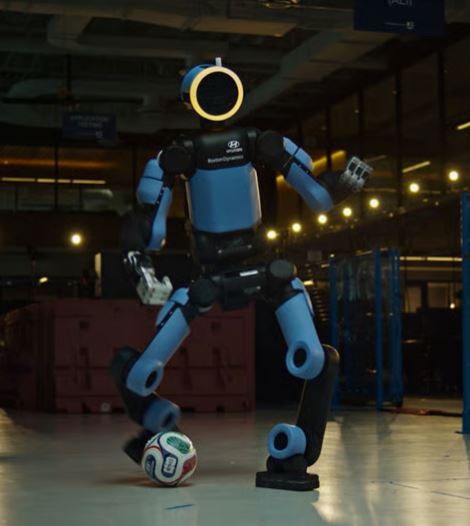
Hyundai’s School of Football campaign, produced with Boston Dynamics, put the Atlas robot through a process of learning professional football skills. The series has been watched over 140 million times in just a few weeks. Few of those viewers likely know the true significance of what actually happened in that final episode though.
Atlas executed a move called the Ghost Rabona — a disguised cross-leg strike that takes most professional players years to develop, and which many never fully master.
Hyundai has confirmed no CGI was used; the footage shows the robot performing the physical skill flawlessly. Atlas reportedly acquired the skill using Reinforcement Learning trained on motion-capture data, compressing what would typically take roughly a year of practice into a single day of computation.
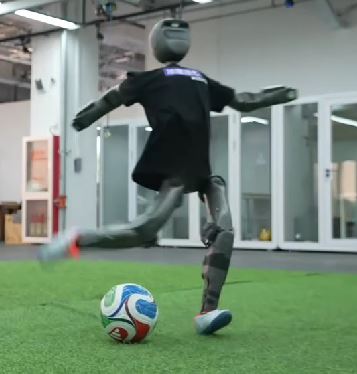
At the opposite end of the football spectrum sits raw power. Booster Robotics — a Chinese firm entering the RoboCup 2026 next month — recently filmed its T2 model taking penalties against a former Chinese woman’s national-team goalkeeper.
Recorded shot speed reached 82mph, reportedly without the robot operating at full power. One strike even left a visible damage in a wall behind the goal during testing at the firm’s studio.
Underpinning both ends of this spectrum is RoboCup itself — founded in 1997 with an explicit long-term target: a fully autonomous humanoid robot team capable of beating the reigning human World Cup champions by 2050.
RoboCup 2026 takes place in Incheon, South Korea, from June 30th through July 6th, with Booster Robotics’ T1 and K1 models among the entrants.
Robot Combat — From Novelty to Professional League
Robot combat as a spectator format isn’t new — BattleBots (USA) and Robot Wars (UK) built a large and loyal fanbase around the wheeled and tracked destruction machines. What launched in Shenzhen in February 2026 is a different category of competition entirely though.
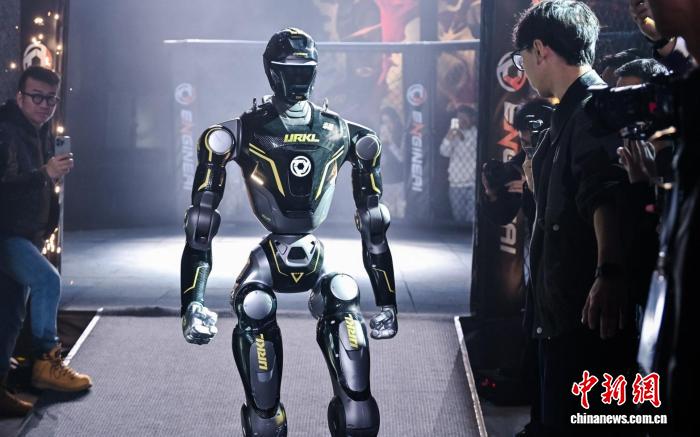
The Ultimate Robot Knockout Legend — URKL — bills itself as the world’s first professional free-combat league built specifically for humanoid robots. Sixteen teams are competing across a season running through until December 2026, with finalists set to contest a prize purse of 10 million Chinese Yuan, (around $1.4 million). Footage from the league shows robots performing aerial rotation kicks and combination strikes well beyond what a human fighter could physically execute.
The league’s stated purpose is technical — a stress test for motion control, balance and impact resistance under combat conditions. The competition is ultimately a showcase vehicle for EngineAI’s T800 humanoid robots.
A broader competitive structure exists alongside URKL in the form of the World Humanoid Robot Games, which drew 280 teams from 16 countries across 26 disciplines — including boxing — in its 2025 edition, held in Beijing. The 2026 edition returns in August.
Sports Where Robots Are Already Beating Humans
The most understated category in robot sport right now may also be the most significant — precision sports, where robots aren’t simply competing, but winning, against professionals, under fair conditions.
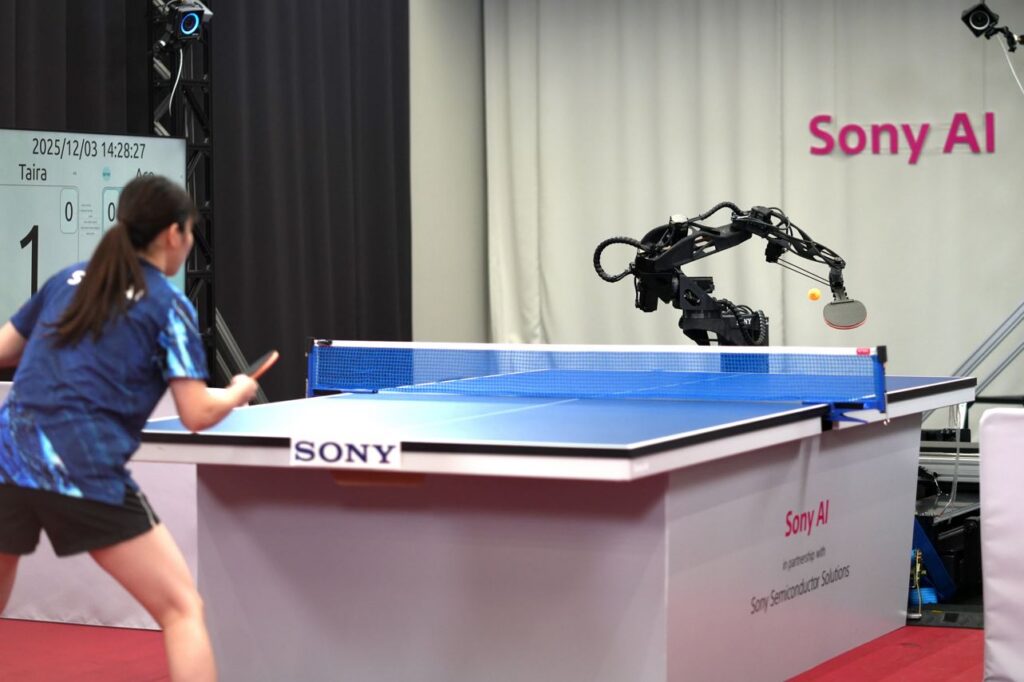
In April 2026, Sony’s Ace robot played a five-match series against Miyuu Kihara, a player ranked inside the world’s top 25, and won three. Crucially, the margin of victory wasn’t mechanical speed — a robotic arm will always out-swing a human one. Ace won by reading spin off the ball, predicting its trajectory, and returning shots with a consistency that mirrors elite-level tactical play. Kihara didn’t dispute the result.
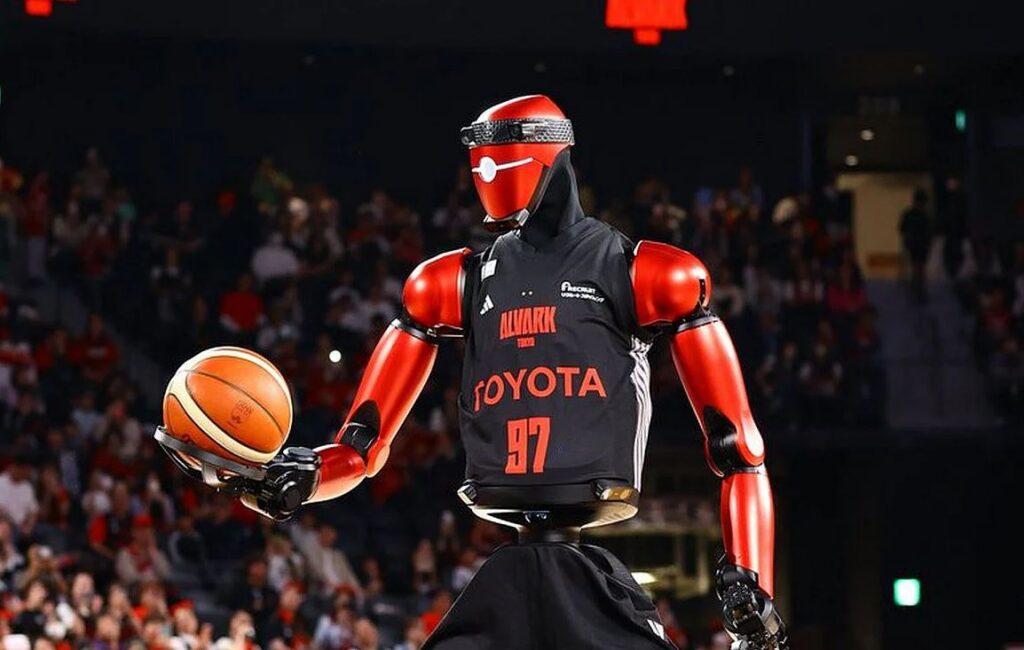
Similar precision-based robot abilities are being developed in basketball, with Toyota’s CUE7 robot. The robot performed a stunning display of technical ability at a Japanese B League game in the Tokyo Toyota Arena, in front of the world’s media, on April 12th, 2026. It’s not likely to be long before this robot (and others) are competing against human players in similar events to that arranged but Sony for their Ace robot.
The Overall Robot Sporting Picture in 2026
Taken individually, any one of these stories — a broken world record, a robot beating a ranked professional, a $1.4 million combat league, a robot executing one of football’s hardest tricks — would likely have made international headlines on its own merits. Together, inside a single twelve-month window, they describe something closer to the early formation of an entire sporting industry.
Coverage of that formation, in English-language media at least, has been minimal.