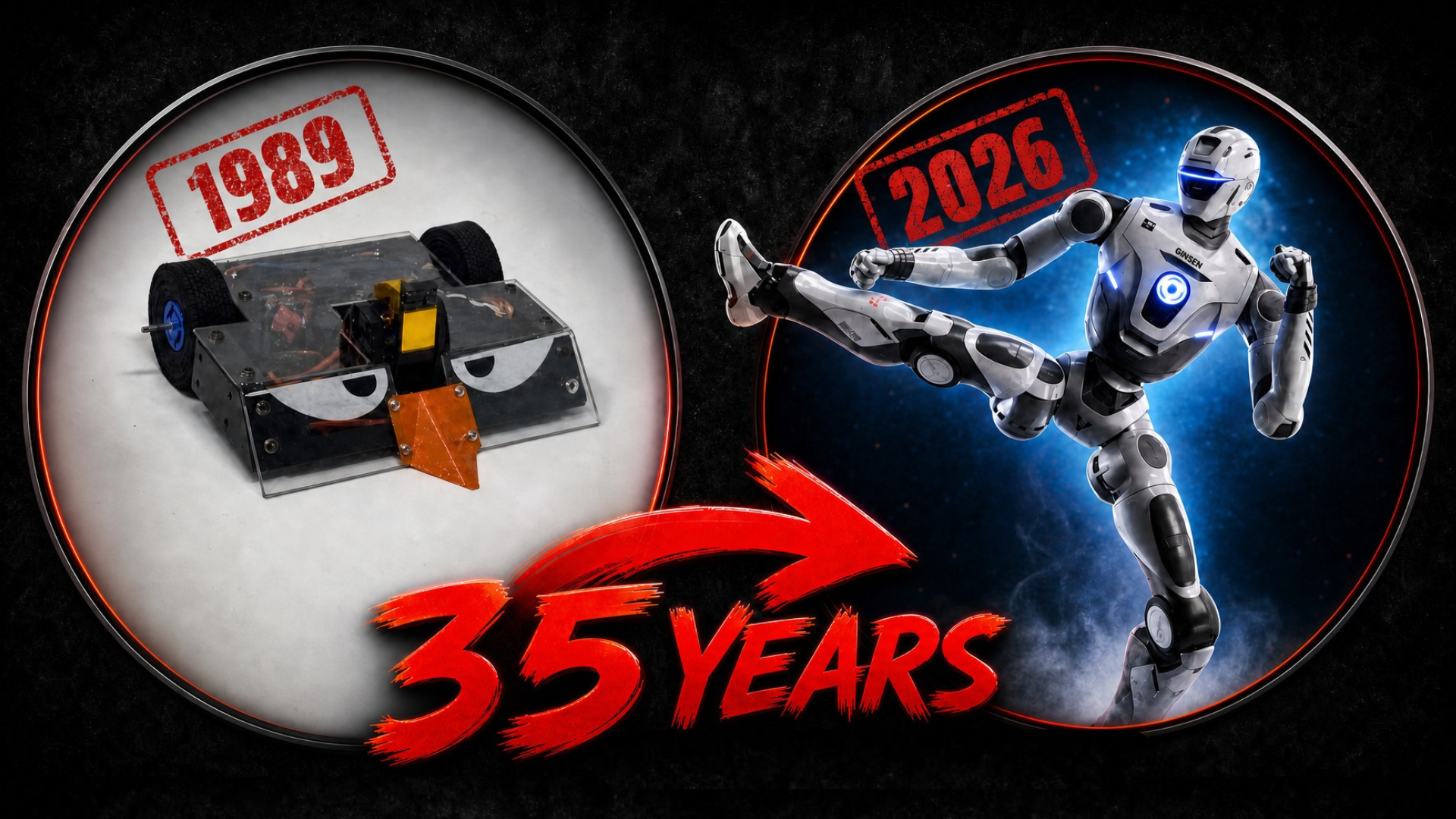
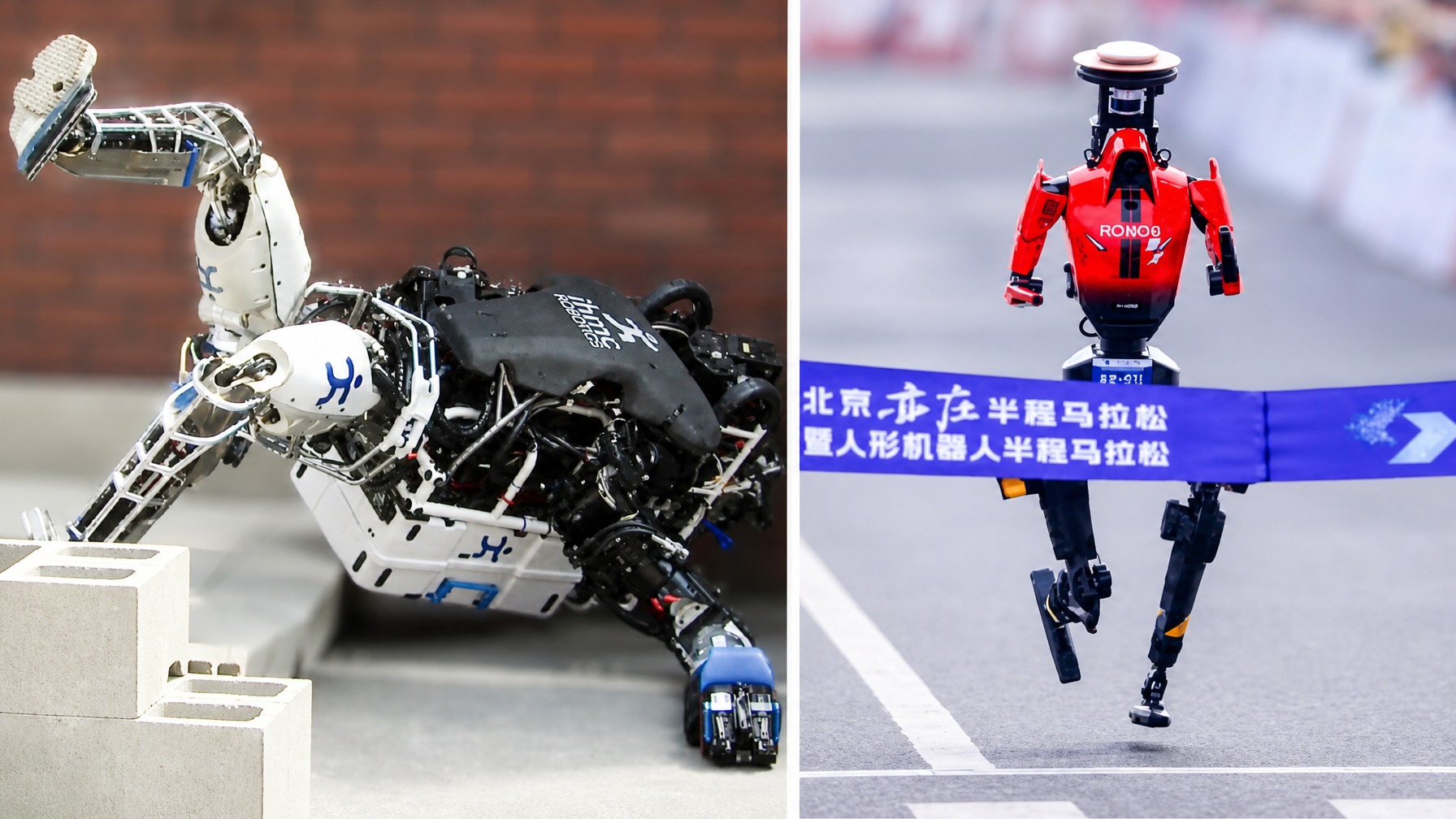
This is the second article in a 2-part series covering the origins of robot combat sport over the past 35 years. The first part can be viewed here and covers the origins in Denver 1989, through to the BattleBots golden age, Robot Combat League’s single television season, and the underground community that kept the sport alive when the cameras left.
This second part picks up where that history ends — with a viral international duel that went bankrupt, a Chinese competition that generated 1.8 billion views, and the three organizations now competing to define what robot combat sport becomes next.
Video Overview (24:18 mins)
MegaBots — The Viral Duel That Asked the Wrong Question
In 2015, a startup called MegaBots posted a YouTube video challenging Japan’s Suidobashi Heavy Industry — makers of the Kuratas robot — to a giant robot duel. The challenge went viral. Japan accepted, on one condition: hand-to-hand combat rather than the cannon fire MegaBots had proposed.
Two years of preparation followed. MegaBots raised venture capital, ran a Kickstarter campaign, and built a twelve-ton robot called Eagle Prime specifically for the fight. Sponsors including Parker Hannifin came on board. A production crew flew to Japan. The duel took place in a repurposed steel mill and was released on YouTube in October 2017. Eagle Prime won.
The video was watched by millions.
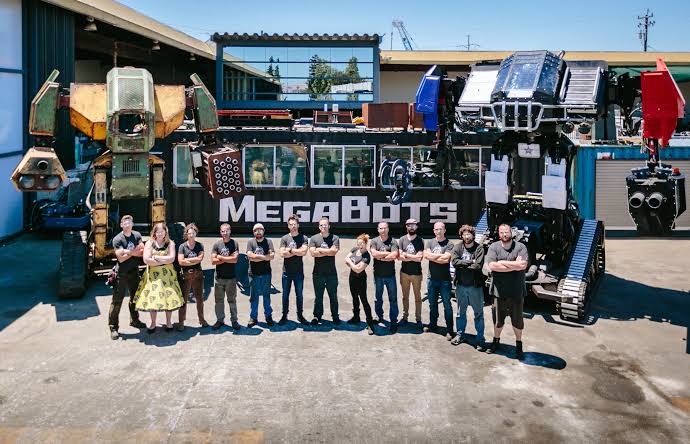
One of MegaBots’ co-founders later admitted openly, in a candid livestream watched during the COVID lockdowns, that several sequences had been pre-planned — that the robots, while genuinely enormous and the damage genuinely real, couldn’t perform reliably enough without theatrical assistance to produce the spectacle that the format demanded. The chainsaw sequence — Eagle Prime tearing into Kuratas with a spinning blade the pilot hadn’t originally planned to use — was one of the few moments of genuine spontaneity in the fight. It was also, by the co-founder’s own account, one of the best moments in the entire production.
MegaBots went bankrupt. Multiple times. The company eventually dissolved. Eagle Prime was sold to a single engineer.
The co-founder’s post-mortem raised a question that remains unresolved in 2026: is giant robot combat scripted entertainment theatre like WWE wrestling, or is it genuine athletic competition in the form of UFC? MegaBots tried to be both, and by their own account, this is part of what killed them.
Every organization currently building robot combat sport has implicitly taken a position on this spectrum. None of them are discussing it in those terms openly. But for long term success it may be wise for them to decide on this.
This is Fighting Robots – China’s 1.8 Billion View Moment
While MegaBots was building toward its Japan duel, something was developing in China that the Western robot combat community had almost no visibility on.
In January 2018, a Shanghai production company called TheMakers launched King of Bots on Zhejiang TV. Three months later they followed it with This Is Fighting Robots on the streaming platform Youku. The format was familiar to anyone who had watched BattleBots — heavyweight wheeled robots, celebrity team managers, an elimination tournament structure. The scale was not familiar at all.
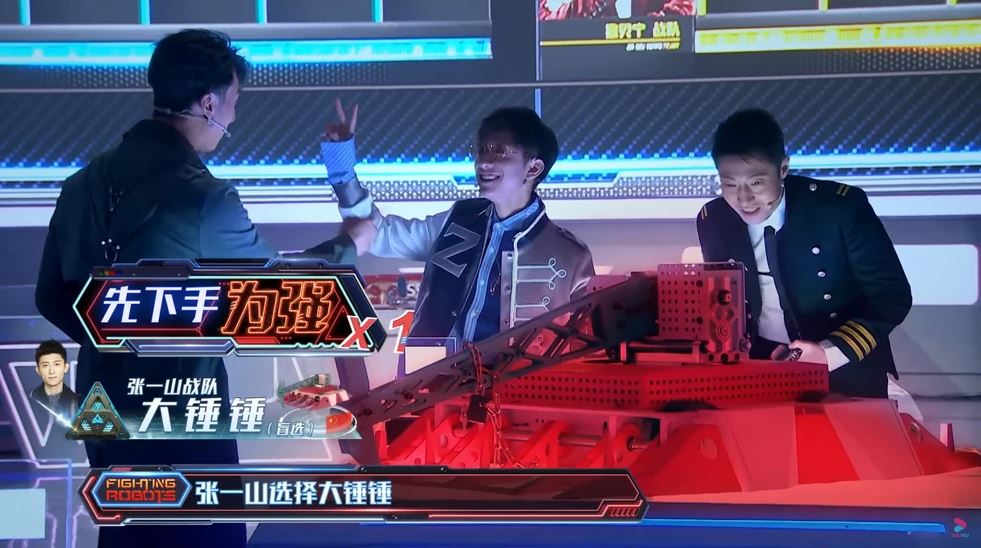
By the end of 2018, This Is Fighting Robots had accumulated 1.8 billion views on Youku. Neither show produced a second season, for reasons that remain largely undisclosed publicly. But the number confirmed something that the American and British robot combat community had assumed without proof: the appetite for this format was genuinely global, genuinely massive, and genuinely transcultural. You didn’t need to have grown up watching BattleBots or Robot Wars to find robots destroying each other compelling television.
The country that generated those 1.8 billion views in 2018 is the same country now running the world’s most technically advanced autonomous humanoid combat league. That’s not coincidental. China’s robot combat entertainment industry and its humanoid robotics manufacturing industry developed in parallel — and the intersection of those two trajectories produced URKL.
The First Autonomous AI BattleBot
Before covering the three major current organizations, one development in the traditional BattleBots format deserves specific attention.
In April 2026, a team at the University of Southern California unveiled Nemesis — the first combat robot built specifically to compete in BattleBots without any human driver. No joystick. No remote control. Three neural networks running simultaneously: one for opponent detection, one for arena positioning, one for autonomous attack decisions. The robot makes every decision in the arena independently.
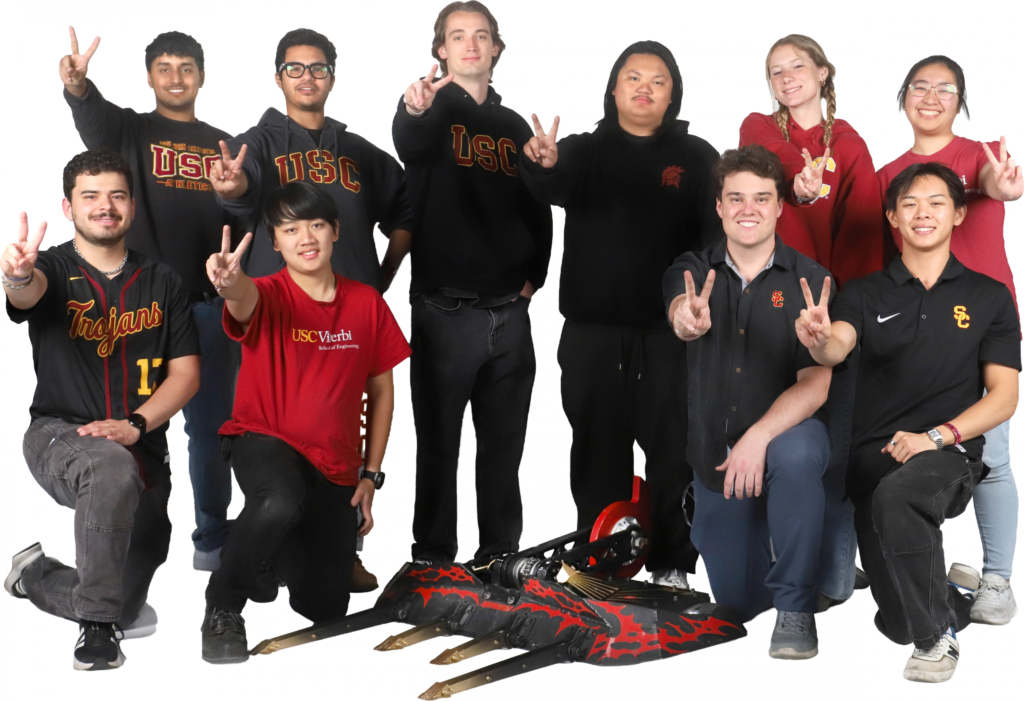
David Le, the twenty-year-old engineering student who led the project, was notably candid about what he had built. “I’m completely aware,” he said publicly, “that having a computer control a death robot with no way of stopping it is a terrible idea.”
He built it anyway.
Nemesis represents the moment the traditional BattleBots format and the new autonomous technology make direct contact for the first time. The arena Marc Thorpe first built in 1994, now hosting a machine that Thorpe couldn’t have conceived of — and that his philosophical successor Mark Setrakian explicitly said he never wanted to see when he built Robot Combat League in 2013. Setrakian’s stated position was that robots without internal intelligence retained the human soul of their pilot. A robot that thinks for itself, in his view, loses precisely what makes the format emotionally compelling.
Whether Setrakian was right is a question Nemesis will help answer.
Three Organizations, Three Philosophies
The current landscape of humanoid robot combat sport is defined by three organizations operating simultaneously, each with a fundamentally different answer to the MegaBots question — WWE or UFC, scripted entertainment or genuine sport.
Ultimate Robot Knockout Legend (URKL) — The Autonomous Vision
The Ultimate Robot Knockout Legend launched its inaugural competitive season in Shenzhen, China, in February 2026. Sixteen teams. Fully autonomous robots — no human pilot during fights, with machines making independent decisions throughout each bout. Aerial rotation kicks. Combination strikes. Combat maneuvers that arguably go beyond what a human fighter’s body could physically execute.
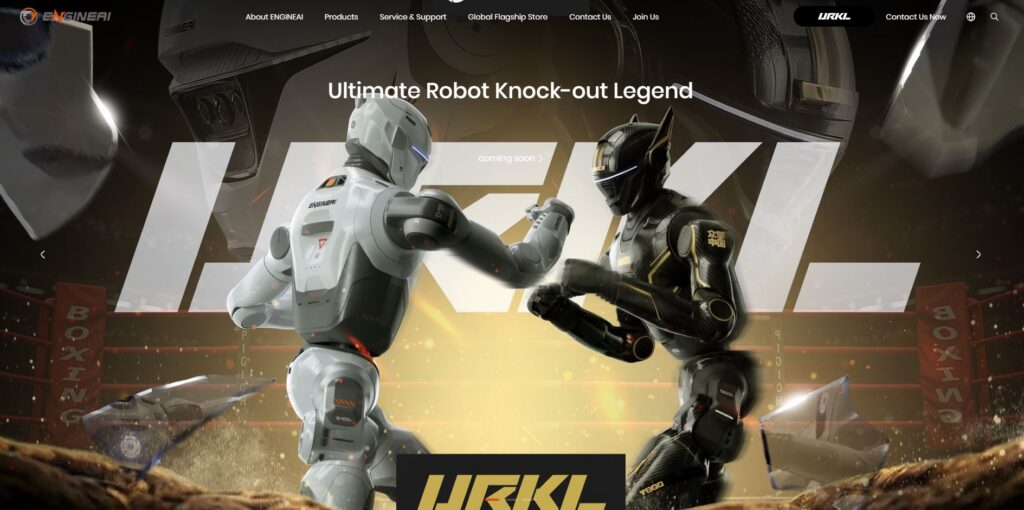
The season runs through December 2026, with finalists competing for a prize of 10 million Chinese yuan — approximately $1.4 million. URKL’s position on the WWE/UFC spectrum is unambiguous: this is genuine competition. The robots fight autonomously. The best system wins.
URKL is the most technically advanced version of robot combat currently running anywhere in the world. It is also, notably, entirely Chinese — in hardware, in organization, and in competitive structure. Its relationship to the import restrictions being debated in the US Congress gives it a political dimension that no other current robot combat organization carries.
Ultimate Fighting Bots (UFB) — The Democratic Vision
Ultimate Fighting Bots was founded in early 2025 in San Francisco, with a founding philosophy almost directly opposed to Ultimate Robot Knockout Legend’s. Where URKL removes the human from the equation entirely, UFB makes human participation its central feature — and deliberately lowers the barrier to that participation as far as possible.

UFB pilots control their robots using game controllers. The same input device that millions of people use to play video games translates directly to robot combat performance. Anyone with a controller and an internet connection can, in principle, compete. The robots are Unitree G1 humanoids — commercially available, consistent hardware across all competitors, eliminating equipment advantages.
UFB has staged sold-out events in San Francisco and Las Vegas, partnered with Unitree Robotics as official hardware supplier, and launched Season 1 in the San Francisco Bay Area in summer 2026 with three major events planned. Their training infrastructure — the Ultimate Bot Studio, a tool that allows pilots to upload video of their own movements which then gets translated into robot motion — represents a genuine democratisation of robot combat that no previous format had attempted.
At a UFB event on Venice Beach, a specific guest took to the pilot seat: Ed Roski, co-founder of BattleBots. The man who had helped build the sport’s first television era competing in its newest iteration, using a game controller to pilot a Unitree G1. The past and present of robot combat sport in one arena.
Robot Entertainment Kombat (REK) — The Embodiment Vision
Robot Entertainment Kombat — REK — was founded in San Francisco and has been running humanoid robot fighting events for just over a year. Their approach occupies different philosophical territory from both URKL and UFB.
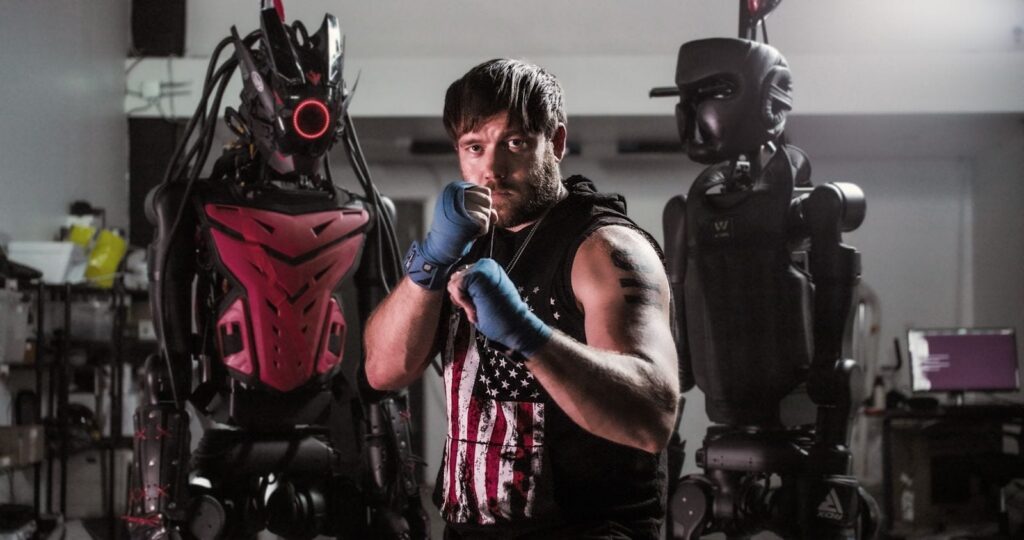
REK pilots wear VR headsets and motion-sensing arm controllers. The experience isn’t remote control — it’s closer to inhabitation. The pilot’s movements translate to the robot’s movements in ways designed to create the sensation of being inside the machine rather than operating it from outside.
In June 2026, REK unveiled their newest competitor: a six-foot EngineAI T800, the first of its kind imported to the United States. It arrived not for a factory, not for a research laboratory, not for a technology demonstration. It arrived to fight.
REK’s founder, who goes by Cix, has described the T800’s impact on audiences with unusual directness: “like a motorized bat going 100 miles per hour.” He has also framed his organization’s mission with equal directness: “We’re making Real Steel a reality.”
The technical architecture behind REK’s robots is more sophisticated than pure teleoperation suggests. Richard England, the UK-based technologist who built REK’s control systems remotely from 5,000 miles away, has explained that the pilots don’t directly mirror every movement to the robot in real time — instead, they trigger pre-trained movement policies, with reinforcement learning determining how each policy actually executes. What the pilot provides is intent. What the reinforcement learning provides is execution. The result looks more fluid and more athletic than direct teleoperation would produce.
Mark Setrakian built Robot Combat League in 2013 specifically to avoid giving robots internal intelligence. REK’s system gives robots exactly that — and uses it to make the pilot’s performance better, not to replace the pilot entirely.
The Question MegaBots Couldn’t Answer
In the back of a church on 7 Mile Road in Detroit, a man named Art Cartwright has been running robot fighting events since 2025 under the name Robowar. The fighters are nine-foot performers in steel mech suits — humans wearing robot costumes, not robots themselves. Cartwright also brings real Unitree humanoid robots to his events, which dance with audience members and compete in informal challenges between bouts.
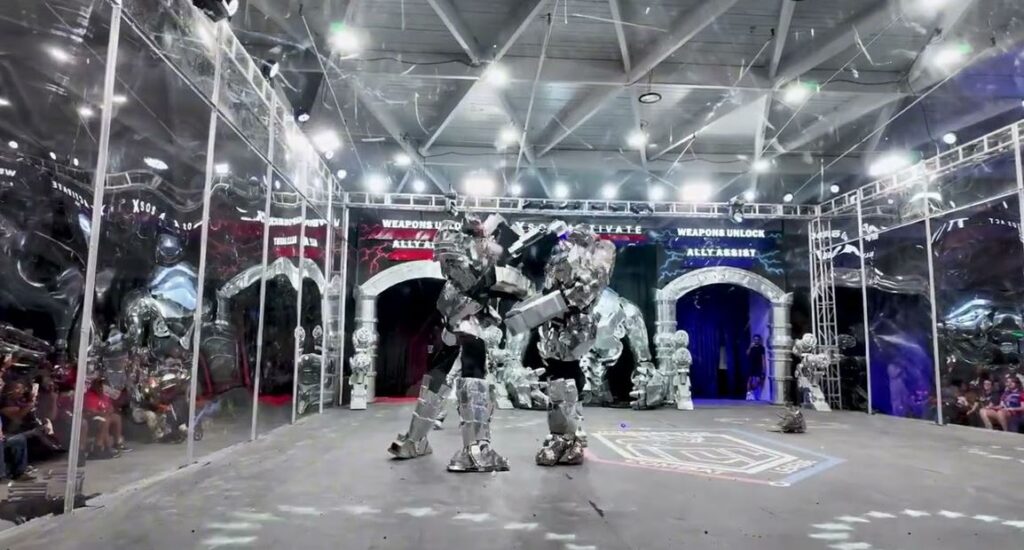
At one recent event, a ten-year-old boy named Kaden Denard watched a Unitree robot compete in a dance-off with a human. He didn’t cheer for the robot. “They are clankers,” he shouted. “I want to be mean to the robots.”
His mother laughed. “You better be nice to them before they finish you.”
Robot sport already has slang. It already has tribal allegiances. It already has a ten-year-old in Detroit who has picked a side.
The Interactive Combat League — Robowar’s parent organization — describes its format as the ultimate hybrid of combat sports and video games, with events structured around city vs city matchups. Detroit vs Atlanta. Los Angeles vs Phoenix. The framework of traditional American sports leagues, applied to humans in robot costumes fighting in front of paying audiences.
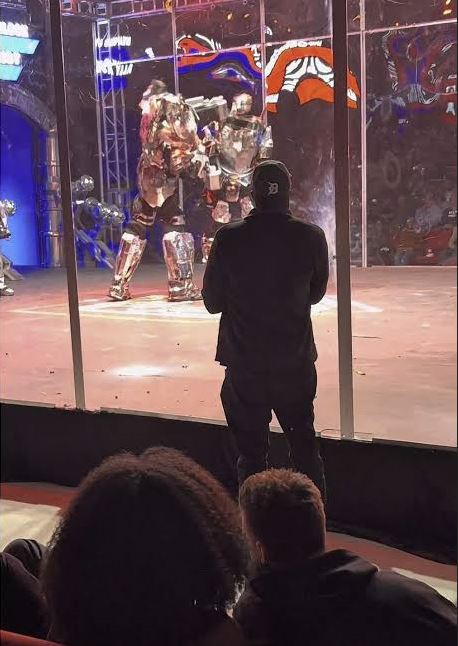
Cartwright’s events are filling seats. They are doing so without autonomous robots, without million-dollar prize pools, without venture capital or television deals. They are doing so because the appetite for robot combat events is clearly evident — even when the robots are simply human performers in suits.
If audiences will pay to watch humans pretending to be robots fight, the demand for the real thing almost certainly exceeds what current attendance figures for URKL, REK and UFB suggest. The market is larger than the sport has yet been able to reach. That gap — between what people apparently want and what the technology has delivered so far — is exactly the space that URKL, REK and UFB are racing to fill.
The MegaBots co-founder asked whether robot combat is WWE or UFC. The honest answer in 2026 is that it’s both, simultaneously, across different organizations — and nobody yet knows which model the audience will ultimately converge on.
Thirty-five years after a folding table in Denver, that question is finally being asked in front of paying audiences rather than in a convention hall. The next few years should provide a concrete answer.
This is Part Two of RoboSports Global’s history of robot combat sport. Read Part One — covering the origins from 1989 through to the BattleBots golden age and the underground years — here.