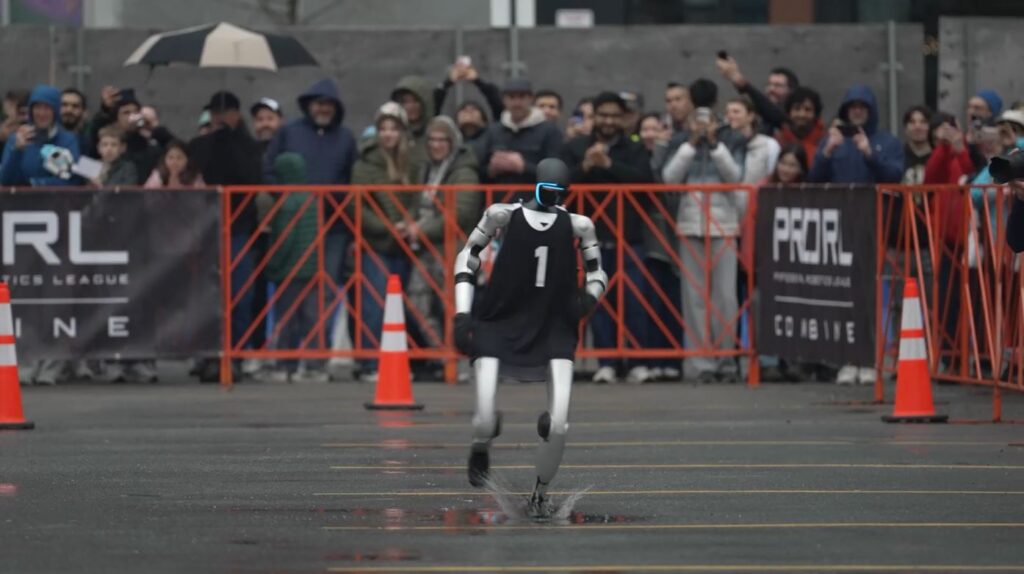
On the morning of April 19, 2026, something happened in Boston’s Seaport District that had no precedent in American sporting history. Humanoid and quadruped robots lined up on a spectator-lined 50-metre course and raced. Not in a laboratory. Not in a controlled research environment. In public, in front of hundreds of people, on Boston Marathon weekend, the day before tens of thousands of human runners would take to the same city’s streets.
The Professional Robotics League — ProRL — had just produced the first professional robotics sports event in North American history.
Video Featuring ProRL (1:46 mins – 2:13 mins)
What the Professional Robotics League (ProRL) Actually Is
ProRL is not simply a sports organization. It operates as a Public Benefit Corporation — a legal structure that formally commits the company to serving a public interest beyond profit generation. ProRL’s stated mission is to “usher in the age of robotics through sports and entertainment, building public acceptance, and accelerating adoption for the broader robotics industry.”
The organization has two operational sides that work in parallel. The first is the sports events themselves — live competitions where humanoid and quadruped robots race, navigate obstacle courses, and complete precision challenges in front of public audiences. The second is a US-based distribution and service network: ProRL is building the infrastructure where businesses (initially) can rent, buy, and keep their humanoid robots running.

The connection between those two sides is not incidental. It reflects a specific thesis about how humanoid robotics adoption happens — that public excitement generated by sport drives awareness, and that awareness drives the commercial demand that makes a service and distribution network viable. The sport funds the infrastructure. The infrastructure enables the sport to scale.
A YouGov survey found that one in three US sports fans already have interest in watching a league of robot athletes, with even stronger demand among younger fans. What’s missing, according to ProRL’s advisors, is infrastructure.
ProRL intends to build that infrastructure.
The Founding Team
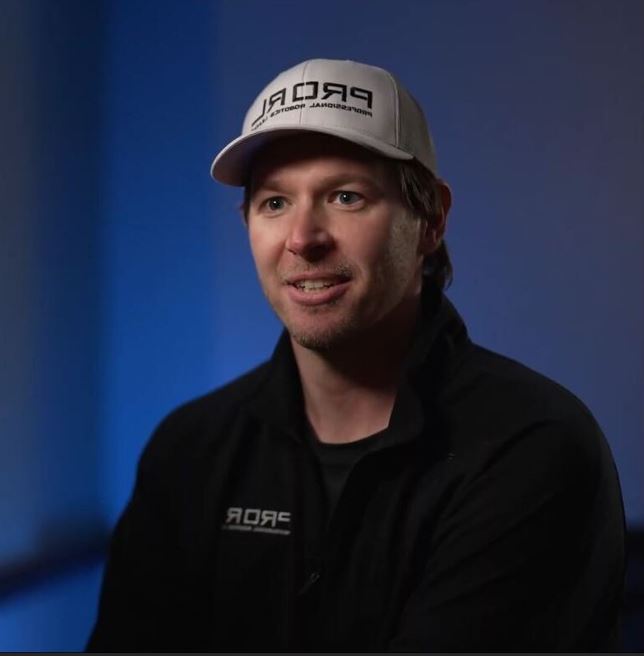
ProRL was founded by David Grilk, who previously worked as director of sports events at Conventures Inc, overseeing Boston Marathon-related events.
His father, Tom Grilk, recently retired as CEO of the Boston Athletic Association — the organization that runs the Boston Marathon itself. The family connection to Boston’s most iconic race is not lost on anyone involved. Choosing Boston Marathon weekend for the inaugural ProRL Combine was a deliberate statement about the kind of sporting legacy the organization intends to build alongside.

Brooke Maher serves as Chief Operating Officer, managing the operational infrastructure that makes both the events and the service network function. Dr. Alex Wissner-Gross — a Harvard-trained physicist, entrepreneur, and one of the most prominent voices in the professional robotics sports space — serves as an advisor.
Dr. Wissner-Gross co-authored the thesis underlying ProRL’s approach in his book Solve Everything with Peter Diamandis: “you can’t solve what you can’t benchmark, and a professional robotics league is the best benchmarking infrastructure we can build.”
ProRL is backed by 021T Capital, a Boston-based investment firm whose principals Devon Triplett and a local co-investor provided the initial funding for the league.
The April 19th Combine — What Actually Happened
The April 19th Combine featured two competition categories: humanoid robots and quadruped robots, racing on a spectator-lined 50-metre course through the Seaport District. Robots from leading manufacturers, research institutions, and universities competed in speed races, obstacle courses, and precision challenges.
Boston Dynamics’ Spot quadruped — one of the most recognizable robots in the world — was among the competitors, representing 3D Cowboys. Its presence alongside humanoid entrants from Chinese and American manufacturers illustrated what ProRL is specifically trying to demonstrate: that robot sport is not a single discipline or a single hardware category, but a broad competitive ecosystem that can accommodate different robot architectures competing within their respective classes.
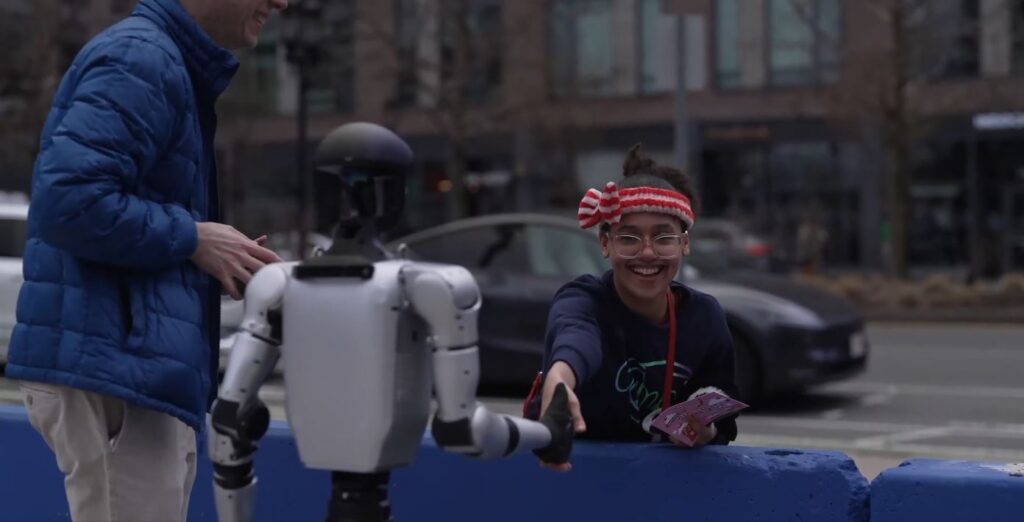
The audience response was striking. 96% of attendees left with positive sentiment toward humanoids. 61% had never seen a humanoid robot in person before.
That second figure is the most important result from the April Combine — not for what it says about the event itself, but for what it says about the gap ProRL is addressing. In a world where humanoid robots are generating hundreds of millions of views online, the majority of people attending a live event specifically focused on humanoid robots had never encountered one in person. The distance between online awareness and lived experience is enormous. ProRL’s events exist to close that distance — one spectator at a time.
It rained on April 19th. The event proceeded rain or shine, with a fluid timeline adapted to weather conditions. The robots raced anyway. The spectators stayed.
The Strategic Context — America vs China
ProRL’s founding is explicitly framed by its leadership in the context of a broader US-China competition in robotics development. Dr. Wissner-Gross has articulated the argument directly: “The country that turns robotics into a spectator sport will lead the physical AI economy.”
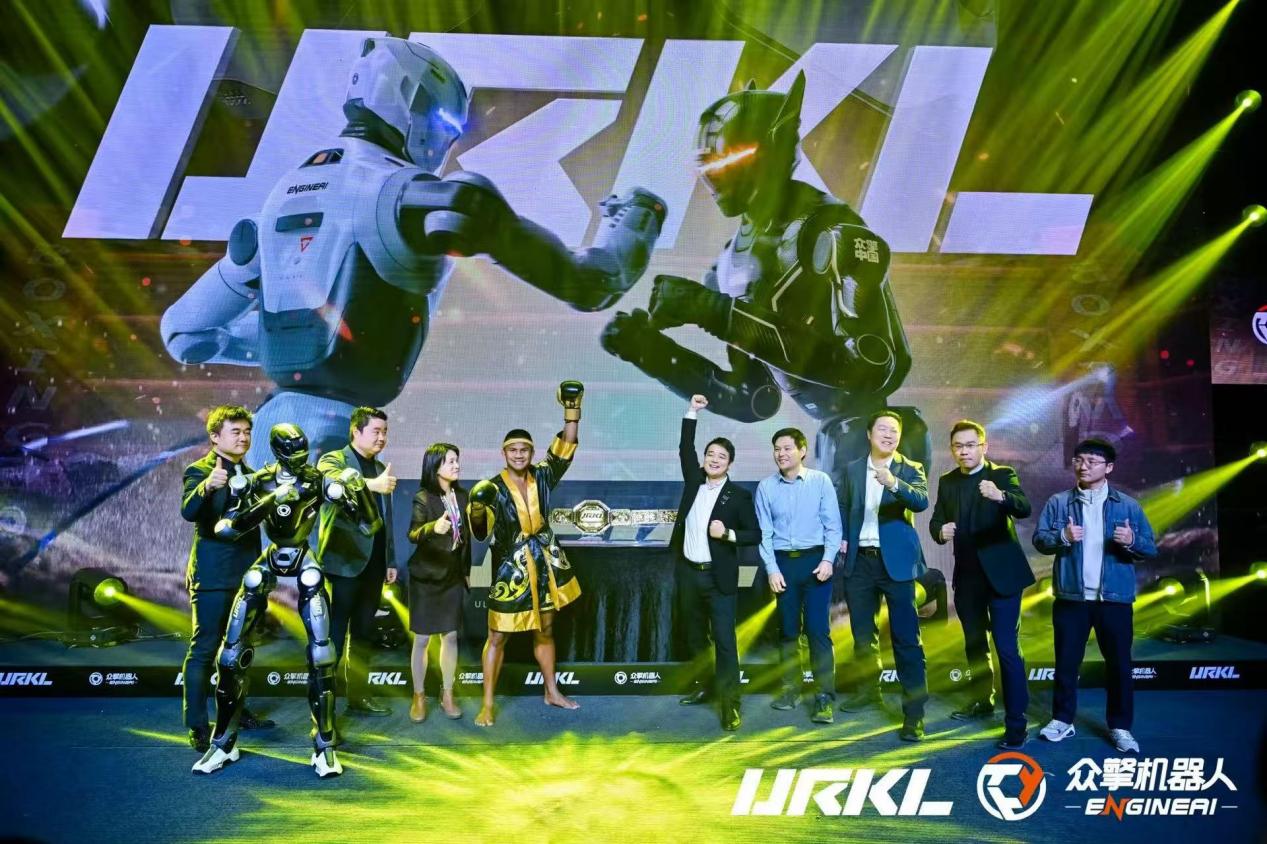
This isn’t rhetorical framing. It reflects a genuine and documented competitive dynamic. Last August, 500 robots from 16 countries competed in track and field, soccer, and kickboxing at the World Humanoid Robot Games in China. The Ultimate Robot Knockout Legend (URKL) professional humanoid combat league launched in Shenzhen in February 2026 with a $1.4 million prize pool. China’s robot sports infrastructure — competitions, leagues, events, audiences — is significantly more developed than anything currently existing in the United States.
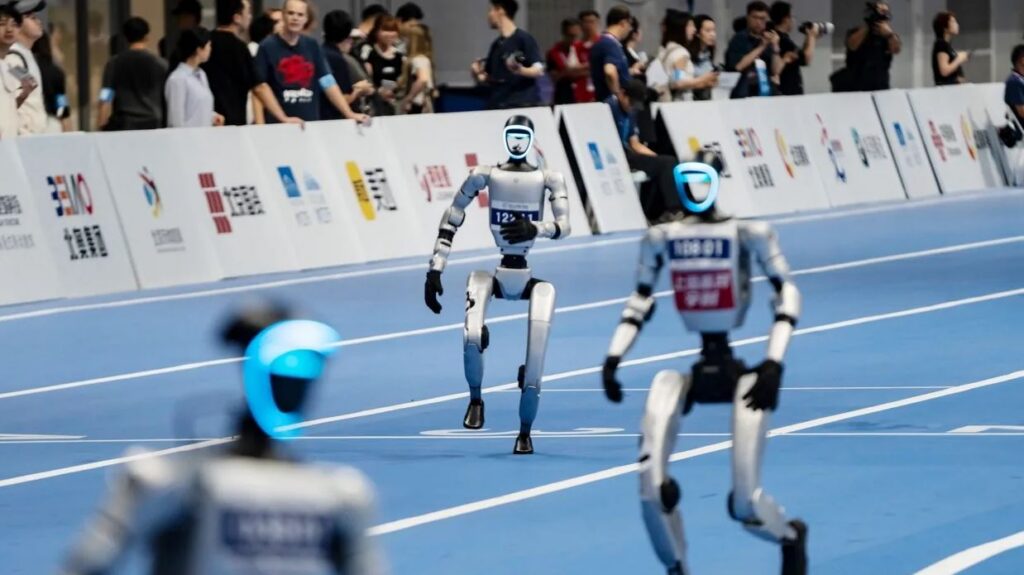
ProRL’s Combine in April 2026 was America’s direct response: proof that the US can build professional robotics sports infrastructure, proof that American audiences will attend, and proof that American and Chinese robots can compete on the same course under the same conditions.
The race featured both American and Chinese-made robots competing side by side — a deliberate choice that positions ProRL as a genuinely international competition platform rather than a purely domestic one, even as it builds the US infrastructure that American robotics companies need to compete credibly on the global stage.
What Comes Next
The April Combine was explicitly framed by ProRL as a founding moment — the first data point in what the organization intends to build into a permanent competitive infrastructure.
Plans are already in motion for expansion events later in 2026, followed by a full 10 to 12-event season in 2027 with standings and multiple markets. The competition formats are expected to evolve beyond pure racing as the league develops — ProRL eventually plans to test robots on “commercially valuable tasks” that could be used in hospitals and warehouses, building a direct bridge between the spectator experience and the industrial applications that represent the broader commercial opportunity for humanoid robotics.
Why ProRL Matters Beyond the Events
The significance of ProRL isn’t reducible to the races themselves. A 50-metre robot sprint on a wet day in Boston in April is not, by itself, a transformative sporting moment.
What matters is the infrastructure being built around it. A Public Benefit Corporation with a formal commitment to public education about robotics. A service and distribution network that brings humanoid robot maintenance capability to the US market. A founding team with deep roots in American distance running — the sport that, more than almost any other, is defined by the relationship between human endurance and technological progress.
As one observer noted in covering the April event: “Suddenly, the world has become more interesting. And I think it will soon be crazy how matter-of-fact the robots will be. We all have cars, right? But it wasn’t long ago, in the grand scheme of things, that the automobile was brand new.”
Robot sport is, right now, where the automobile was in the 1890s. Remarkable. Unreliable. Occasionally chaotic. Watched by the curious and dismissed by the cautious. ProRL is building the roads.
This profile will be updated as RoboSports Global’s coverage of ProRL develops. Additional detail on the founding team’s vision, the Fall 2026 event, and the 2027 season roadmap will be added as it becomes available.